Need to understand CAN bus and how it enables advanced battery monitoring?
In this guide, we explain the Controller Area Network (CAN bus) protocol and how Metis Engineering’s sensor technology leverages this robust communication standard to deliver critical battery safety and environmental monitoring across electric vehicles, energy storage systems, and industrial applications.
What is CAN Bus?
CAN bus (Controller Area Network) is a vehicle communication protocol that enables electronic control units (ECUs), sensors, and actuators to exchange data reliably without requiring a central computer. Originally developed by Bosch in 1986 for automotive applications, CAN bus has become the global standard for communication in vehicles, industrial machinery, and energy systems.
Think of CAN bus as the nervous system of modern vehicles and battery systems. Just as your nervous system enables different parts of your body to communicate and respond to stimuli, CAN bus allows distributed sensors and controllers to share critical information in real-time.
How CAN Bus Works: The Basics
In a CAN bus network:
– All devices connect to a shared two-wire bus consisting of CAN High and CAN Low lines (typically colour-coded yellow and green respectively) – Any device can broadcast messages containing sensor data or control commands – All devices receive every message, but only act on relevant data based on message identifiers – No central controller is required – the network operates as a peer-to-peer system – Message priority is built-in – critical safety data automatically takes precedence over less urgent information
This decentralised architecture makes CAN bus extremely robust for safety-critical applications like battery monitoring, where sensor data must reach battery management systems reliably even in harsh electrical environments.
Why CAN Bus Dominates Battery Monitoring Applications
For battery safety sensors and environmental monitoring systems, CAN bus offers compelling advantages over alternative communication protocols:
1. Electromagnetic Interference (EMI) Resilience
Battery packs generate significant electromagnetic noise, particularly during high-current charging and discharging. CAN bus uses differential signalling on twisted-pair cables, making it highly resistant to EMI. When electrical noise affects both wires equally, the differential voltage remains stable, ensuring data integrity.
This robustness is critical for sensors monitoring battery pack internal conditions. A sensor must reliably detect early warning signs like volatile organic compound (VOC) emissions or pressure changes even when operating inside electrically noisy battery enclosures.
2. Real-Time Deterministic Communication
Unlike Ethernet or wireless protocols, CAN bus provides deterministic message delivery with predictable latency. When a battery cell begins venting gases – an early indicator of thermal runaway – the sensor can immediately transmit this critical alert to the battery management system without competing for network bandwidth or waiting for polling cycles.
CAN bus arbitration ensures that messages with the lowest identifier values (highest priority) gain immediate bus access. Battery safety sensors can be configured to use high-priority identifiers, guaranteeing that thermal runaway warnings pre-empt less critical system messages.
3. Multi-Drop Capability for Distributed Monitoring
Large battery packs in electric vehicles or stationary energy storage systems require multiple monitoring points. CAN bus supports up to 2032 nodes on a single network, enabling comprehensive coverage without complex wiring.
Multiple sensors can be daisy-chained along a single CAN bus backbone, dramatically simplifying installation compared to point-to-point analog sensor systems. Each sensor monitors its local environment and broadcasts data with a unique identifier, allowing the battery management system to pinpoint which module is experiencing abnormal conditions.
4. Standardised Integration
CAN bus standardisation (ISO 11898) ensures interoperability between sensors, battery management systems, and vehicle control units from different manufacturers. A sensor using standard CAN communication can integrate into any CAN-equipped system with minimal custom development.
This standardisation extends to higher-layer protocols used across industries: – OBD2 for passenger vehicle diagnostics – SAE J1939 for commercial vehicles and heavy-duty equipment – CANopen for industrial automation – NMEA 2000 for maritime applications
Battery sensors supporting CAN bus can therefore deploy across automotive, industrial, and marine battery applications using the same core hardware.
CAN Bus Technical Specifications for Battery Sensors
Understanding key CAN bus parameters helps optimise sensor performance:
Baud Rate Selection
CAN bus supports baud rates from 125 kbit/s to 1 Mbit/s (Classical CAN):
– 1 Mbit/s: Maximum speed for automotive battery monitoring where cable lengths remain under 40 meters – 500 kbit/s: Common for industrial battery systems with moderate cable lengths – 250 kbit/s: Robust choice for large stationary energy storage systems with extended cable runs – 125 kbit/s: Maximum reliability for harsh environments, supports cables up to 500 meters
Battery safety sensors typically default to 500 kbit/s as a balance between speed and cable length flexibility, with configurable baud rates to match specific installation requirements.
Message Structure
CAN frames carry sensor data in 8-byte payloads. Efficient battery sensors pack multiple parameters into single messages:
A typical battery environmental sensor might transmit: – VOC concentration (2 bytes) – Absolute pressure (2 bytes) – Temperature (2 bytes) – Relative humidity (2 bytes)
Total: 8 bytes in one CAN message, transmitted at regular intervals (e.g., 1 Hz for continuous monitoring, accelerating to 10 Hz when threshold exceeded).
Termination Requirements
CAN networks require 120-ohm termination resistors at each end of the bus to prevent signal reflections. Battery sensors typically provide configurable termination via DIP switches or software settings, simplifying installation as the end device on a bus segment.
Metis Engineering’s CAN-Based Sensor Family
Metis Engineering has developed a comprehensive range of CAN bus environmental sensors specifically designed for battery safety monitoring, hydrogen leak detection, and air quality assessment. Each sensor leverages CAN bus to provide reliable, real-time data where it matters most.
Cell Guard: Battery Pack Environmental Monitoring
Cell Guard is Metis Engineering’s flagship battery safety sensor, purpose-built to detect the earliest signs of cell failure in lithium-ion battery packs. This CAN-based device measures:
Environmental Parameters:
– Volatile Organic Compounds (VOCs) – detecting off-gassing from electrolyte decomposition – Absolute pressure – identifying cell venting events – Air temperature – monitoring internal pack temperature – Relative humidity and dew point – detecting moisture ingress and condensation risk – Optional: Acceleration (±24G) – capturing shock loads during manufacture, transport, or collisions
CAN Bus Integration Features:
– Configurable CAN bus speed and address – adapts to any battery system architecture – Supplied DBC file – enables immediate decoding of CAN messages by battery management systems – Low-power monitoring mode – continuously monitors environment but only transmits on CAN when pre-set thresholds are exceeded, conserving power – Programmable digital output – 500mA low-side drive pin triggers external warnings when thresholds are met – Automotive-grade connectivity – 5-pin Molex Nano-Fit power connector for reliable industrial/automotive installations
Why VOC Detection Matters:
Research conducted by Sandia National Laboratories in the United States validated Cell Guard’s capability to detect thermal runaway in electric vehicles more quickly than traditional temperature-only methods. When lithium-ion cells begin failing, they release volatile organic compounds as the electrolyte starts decomposing – often well before temperatures reach critical levels.
By monitoring VOC emissions via a CAN-connected sensor installed near the battery breather port, battery management systems gain minutes of additional warning time to safely shut down, isolate affected modules, or activate thermal management systems.
Applications:
– Electric vehicles (cars, buses, trucks, racing vehicles) – Stationary energy storage systems (grid-scale, commercial, residential) – Second-life battery repurposing (detecting cell inconsistencies in repurposed EV batteries) – Electric boats and eVTOL aircraft – E-bikes and micromobility platforms
CAN Network Architecture:
Cell Guard sensors can be daisy-chained together on the same CAN bus, with each unit assigned a unique CAN address corresponding to its battery pack or module location. If one sensor detects VOCs combined with pressure spikes – key indicators of cell venting – the system immediately identifies which pack is affected, enabling targeted response rather than wholesale system shutdown.
For large energy storage installations, Metis Engineering offers the Cell Guard Link Kit to simplify multi-sensor CAN bus deployment, allowing dozens of sensors to monitor different battery modules while reporting to a central battery management system.
H Guard: Hydrogen Leak Detection for Fuel Cells
As hydrogen emerges as a critical clean energy carrier, leak detection becomes paramount. H Guard is Metis Engineering’s CAN-based hydrogen sensor, designed to detect even trace hydrogen gas concentrations before they reach explosive levels.
Key Features:
– Detects parts-per-million (ppm) hydrogen concentrations – CAN bus communication for integration with vehicle/facility safety systems – Real-time alerts enable immediate operator response – Suitable for hydrogen fuel cell vehicles, refuelling stations, and industrial hydrogen systems
CAN Bus Advantage:
H Guard broadcasts hydrogen concentration data and alarm status over CAN bus, enabling hydrogen-powered vehicles to automatically activate ventilation systems, shut down fuel cell stacks, or alert drivers when leaks are detected. The deterministic nature of CAN ensures critical hydrogen alerts never get delayed behind lower-priority vehicle messages.
Air Wise: HVAC and Ventilation Monitoring
Air Wise extends Metis Engineering’s CAN sensor portfolio to indoor air quality applications, monitoring: – Nitrogen oxides (NOx) – Carbon dioxide (CO₂) – Temperature and humidity
Applications:
– Building HVAC systems requiring emissions monitoring – Vehicle cabin air quality – Industrial facilities with air quality compliance requirements
CAN bus integration allows Air Wise sensors to interface with building automation systems, vehicle climate controls, or industrial process controllers using standard CAN protocols.
CAN Bus DBC Files: The Decoder Ring for Sensor Data
While CAN bus defines how devices communicate, it doesn’t specify what the data means. This is where DBC (CAN Database) files become essential.
What is a DBC File?
A DBC file is a text-based database that documents how to decode raw CAN messages into meaningful engineering values. It specifies:
– Message identifiers – which CAN ID corresponds to which sensor – Signal definitions – how to extract individual parameters from the 8-byte payload – Scaling and offset – converting raw values to physical units (ppm, kPa, °C, etc.) – Value ranges – valid minimum/maximum values for each parameter
Metis Engineering’s Approach to DBC Files
Every Metis Engineering CAN sensor ships with a comprehensive DBC file, dramatically simplifying integration:
Example: Cell Guard DBC Snippet
“` BO_ 256 Cell_Guard_Data: 8 Cell_Guard SG_ VOC_Concentration : 0|16@1+ (0.1,0) [0|6553.5] “ppm” Battery_Management_System SG_ Absolute_Pressure : 16|16@1+ (0.01,0) [0|655.35] “kPa” Battery_Management_System SG_ Temperature : 32|16@1+ (0.01,-273.15) [0|382.2] “degC” Battery_Management_System SG_ Relative_Humidity : 48|16@1+ (0.01,0) [0|100] “%” Battery_Management_System “`
This DBC entry tells the battery management system: – Message ID 256 contains Cell Guard data – VOC concentration starts at bit 0, uses 16 bits, scales by 0.1 to get parts-per-million – Temperature starts at bit 32, scales by 0.01 and offsets by -273.15K to convert to Celsius – And so on for each parameter
Battery engineers simply import the Cell Guard DBC file into their battery management software, CANalyzer, or data logging tools, and immediately see decoded physical values rather than raw hexadecimal data.
Configurable CAN Addresses for Multi-Sensor Networks
When multiple Cell Guard sensors monitor different battery modules on the same CAN bus, each sensor must use a unique CAN identifier to avoid message collisions. Metis Engineering sensors provide configurable CAN addresses, allowing engineers to assign:
– Module 1: CAN ID 0x100 (256 decimal) – Module 2: CAN ID 0x101 (257 decimal) – Module 3: CAN ID 0x102 (258 decimal) – And so on…
The battery management system subscribes to all relevant identifiers, knowing that ID 0x100 represents front battery module conditions while ID 0x102 represents rear module conditions. When sensor 0x102 reports elevated VOC levels, the system knows precisely which module requires attention.
Real-World Application: ZEEbus Electric Double-Decker Integration
 ZEEbus, a UK-based electric vehicle repowering specialist, retrofits diesel buses with electric drivetrains. Their converted Alexander Dennis E400 double-decker buses incorporate eight lithium-ion battery packs, with a Cell Guard sensor installed in each pack’s enclosure, all connected to a single CAN bus network.
CAN Network Architecture
Each of the eight Cell Guard sensors: 1. Monitors VOC levels, pressure, temperature, and humidity inside its respect
 ive battery enclosure 2. Transmits data on the shared CAN bus with a unique identifier (e.g., Pack 1 = ID 0x100, Pack 2 = ID 0x101, etc.) 3. Operates in low-power mode until thresholds are exceeded 4. Triggers immediate high-frequency reporting when abnormal conditions are detected
The bus’s central battery management system subscribes to all eight CAN identifiers, continuously assessing each pack’s health independently.
Proactive Thermal Runaway Mitigation
If Cell Guard sensor 0x104 (Pack 5) detects a combination of elevated VOCs and sudden pressure increase – signature indicators of cell venting – the CAN bus architecture enables the battery management system to:
- Identify which specific pack is affected (Pack 5) without ambiguity 2. Isolate the electrical load to Pack 5 via contactors 3. Activate enhanced cooling for Pack 5 specifically 4. Alert the driver with pack-specific diagnostic information 5. Log the incident with timestamps and sensor readings for post-event analysis
This early intervention can halt thermal runaway progression or significantly mitigate its effects by acting minutes before temperatures reach dangerous levels.
The deterministic nature of CAN bus ensures that these critical safety messages from Cell Guard pre-empt all non-essential bus traffic, enabling immediate protective response.
CAN Bus Data Logging for Battery Development and Validation
Beyond real-time monitoring, CAN bus enables comprehensive data logging for battery testing, validation, and warranty investigations.
Development Kit Integration
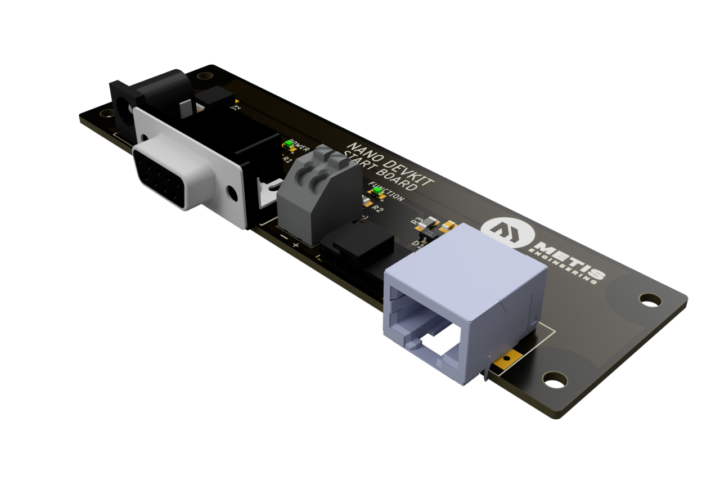
Metis Engineering offers the Cell Guard Development Kit for rapid desktop analysis. This kit provides: – CAN-to-USB interface for connecting Cell Guard to a computer – All necessary cables for plug-and-play evaluation – Software tools for real-time visualisation of sensor data – Exported DBC files for integration with third-party CAN analysis tools
Engineers can use standard CAN logging interfaces (like the popular CANedge family or Vector CANalyzer) to record Cell Guard data during: – Thermal runaway testing – capturing VOC and pressure profiles during controlled cell abuse tests – Environmental stress testing – validating sensor performance across temperature and humidity extremes – Vibration and shock testing – correlating acceleration data with subsequent cell performance changes – Long-term aging studies – monitoring humidity ingress and cell venting frequency over thousands of cycles
The logged CAN data, decoded via the provided DBC file, generates invaluable insights for battery pack optimisation, safety validation, and predictive maintenance algorithm development.
Second-Life Battery Assessment
 Companies repurposing electric vehicle batteries for stationary storage face uncertainty about cell health after automotive service. Integrating Cell Guard sensors during the testing phase provides objective CAN-logged data on: – Moisture accumulation inside packs (indicating seal degradation) – Residual off-gassing (suggesting ongoing electrolyte decomposition) – Pack-to-pack consistency (identifying outliers unsuitable for reuse)
This CAN-logged data informs decisions about whether packs can be safely repurposed, improving both safety and economics of second-life battery applications.
Integration Best Practices: Installing CAN Bus Battery Sensors
Successful Cell Guard deployment requires attention to both CAN bus electrical requirements and sensor positioning.
CAN Bus Wiring Guidelines
Topology:
– Use linear bus topology (daisy-chain) rather than star topology – Minimise stub lengths – connect sensors directly to the main CAN backbone – Keep total bus length under 40 meters for 1 Mbit/s, up to 500 meters for 125 kbit/s
Termination:
– Install 120-ohm termination resistors at both ends of the CAN bus – Many battery management systems include built-in termination; verify before adding external resistors – Cell Guard sensors can provide configurable termination for end-of-bus installations
Shielding:
– Use shielded twisted-pair cable rated for CAN bus applications – Connect shield to chassis ground at one point only to avoid ground loops – In high-EMI environments, use additional cable armouring
Sensor Positioning for Optimal Detection
Cell Guard performs best when installed: – Near the breather port – where gases exit the battery enclosure, maximising VOC detection sensitivity – Away from direct airflow paths – preventing dilution of VOC concentrations before measurement – In thermally representative locations – monitoring temperatures reflective of overall pack conditions – Secured against vibration – particularly important when using the optional accelerometer variant
For multi-pack systems, install one sensor per pack or per cluster of modules sharing a common enclosure. CAN bus architecture makes adding more sensors straightforward – each additional sensor simply connects to the bus with a unique CAN address.
Beyond Cell Guard: The Broader CAN Bus Ecosystem
While Cell Guard demonstrates CAN bus advantages for battery monitoring, the same protocol enables comprehensive vehicle data collection:
Parallel CAN Bus Networks in Modern Vehicles
Most electric vehicles and commercial trucks utilise multiple separate CAN buses:
– High-speed powertrain CAN (500 kbit/s or 1 Mbit/s) – battery management, motor controllers, inverters – Body CAN (125-500 kbit/s) – lights, doors, windows, climate control – Diagnostic CAN (typically accessed via OBD2/J1939 connectors) – standardised trouble codes and sensor data – Infotainment CAN – displays, audio systems, navigation
Cell Guard sensors typically connect to the high-speed powertrain CAN bus, operating alongside the battery management system and related safety-critical controllers.
Gateway Functionality
Battery management systems often act as CAN gateways, bridging multiple CAN networks. Cell Guard data from the powertrain CAN bus might be: – Retransmitted to the diagnostic CAN for technician access via OBD2 tools – Forwarded to telematics systems for remote fleet monitoring – Logged to internal storage for warranty and forensic analysis
This gateway architecture allows Cell Guard sensors to inform vehicle-level decisions (like reducing charge current when elevated VOCs are detected) while also supporting fleet management and predictive maintenance workflows.
Automotive Standards Compliance
Metis Engineering designs Cell Guard to meet stringent automotive reliability requirements:
ISO Standards Compliance:
– ISO 7637-2:2011 – Electrical disturbances via conduction and coupling – ISO 16750-2:2012 – Electrical and electronic equipment environmental conditions (electrical loads) – ISO 16750-4:2010 – Climatic loads
These standards ensure Cell Guard operates reliably despite: – Load dump transients (voltage spikes when battery disconnects under load) – Jump-start scenarios (reverse polarity, over voltage) – Extreme temperatures (-40°C to +85°C) – Mechanical shock and vibration
Automotive-grade certification matters for battery safety sensors because they must continue functioning precisely when needed most – during electrical faults, accidents, or abuse conditions that might trigger thermal runaway.
Future-Proofing: CAN FD and Beyond
While Classical CAN (ISO 11898-1:2003) remains dominant today, newer CAN variants offer enhanced capabilities:
CAN FD (Flexible Data Rate)
CAN FD, standardised in ISO 11898-1:2015, provides: – Payload up to 64 bytes (vs. 8 bytes Classical CAN) – Data phase speeds up to 8 Mbit/s (while maintaining arbitration at 1 Mbit/s) – Higher overall throughput for data-intensive applications
For battery sensors, CAN FD enables transmitting more comprehensive datasets in single messages: – Full spectral VOC profiles (identifying specific compounds, not just total concentration) – High-resolution pressure waveforms (capturing rapid transients during venting events) – Multi-axis vibration frequency analysis
Metis Engineering’s sensor architecture positions the company to adopt CAN FD as battery systems demand higher data rates, while maintaining backward compatibility with existing Classical CAN deployments.
CAN XL
The recently standardised CAN XL (ISO 11898-1:2024) further increases data rates and payload sizes, targeting applications requiring near-Ethernet bandwidth while retaining CAN’s deterministic behaviour and EMI resilience.
As battery packs grow larger (megawatt-hour scale for commercial vessels and grid storage), CAN XL may become relevant for aggregating data from hundreds of Cell Guard sensors across a single installation.
Conclusion: CAN Bus as the Foundation for Smart Battery Systems
Controller Area Network (CAN bus) has evolved from automotive origins into the de facto standard for reliable, real-time communication in safety-critical systems. For battery monitoring applications, CAN bus provides:
- EMI resilience essential for operating inside electrically noisy battery enclosures 2. Deterministic low-latency messaging for rapid thermal runaway detection and response 3. Multi-drop capability enabling comprehensive monitoring across large battery installations 4. Standardised integration simplifying deployment across automotive, industrial, and marine applications
Metis Engineering’s Cell Guard sensor family exemplifies how purpose-built CAN bus sensors enhance battery safety across the electrification ecosystem. By monitoring volatile organic compounds, pressure, temperature, humidity, and shock loads – then broadcasting this data over robust CAN networks – Cell Guard provides battery management systems with the earliest possible warning of cell distress.
Whether protecting passenger car occupants, ensuring uptime for commercial EV fleets, safeguarding stationary energy storage investments, or enabling second-life battery repurposing, CAN-based environmental monitoring represents a fundamental advance in battery safety engineering.
As the world transitions toward electrified transportation and grid-scale energy storage, the proven reliability and ubiquity of CAN bus ensures that critical battery safety data reaches decision-makers and control systems when milliseconds matter.
Ready to integrate CAN bus battery monitoring into your electric vehicle or energy storage system?
Explore our complete sensor portfolio at www.metisengineering.com to learn how Cell Guard, H Guard, and Air Wise deliver actionable intelligence over industry-standard CAN bus networks.
For technical specifications, DBC files, and integration support, contact us directly.