The news that Volvo has recalled more than 40,000 EX30 electric SUVs over the risk of battery overheating and fire should serve as a wake-up call for the entire electric vehicle industry. Not just for manufacturers, but for everyone involved in battery design, safety engineering, and the systems we rely on to keep drivers safe.
The root cause of the EX30 recall is a manufacturing process deviation that may result in lithium plating growth, which can lead to an internal cell short circuit. Autoblog In practical terms, that means a defect forming silently inside the battery pack — invisible to the driver, undetected by conventional monitoring systems — until it reaches a critical point. Volvo has been urging owners to park outside, away from buildings, and limit charging to 70% Electrek while a fix is developed. For a brand built on a decades-long reputation for safety, it is a deeply uncomfortable position to be in.
But the harder question the industry needs to confront is this: even when the manufacturing defect is eventually resolved, are we doing enough to detect the warning signs before a battery failure becomes a catastrophe?
The answer, in most cases, is no.
The Limits of Conventional Battery Management
Today’s Battery Management Systems (BMS) are sophisticated pieces of engineering. They monitor voltage, current, and temperature, balancing cells and protecting against overcharge. But they are fundamentally reactive tools, designed to manage battery performance rather than detect the earliest signs of internal failure.
Thermal runaway — the self-reinforcing cascade of heat generation that can turn a battery pack into a fire hazard — doesn’t announce itself in the data that a BMS typically monitors. By the time a BMS registers a temperature anomaly significant enough to trigger an alert, the process may already be well underway. Depending on the battery chemistry and the nature of the fault, a conventional BMS can take minutes, or in some cases hours, to raise the alarm. In a thermal runaway event, that delay is the difference between a driver safely exiting a vehicle and a fire that cannot be controlled.
The EX30 situation illustrates exactly this vulnerability. A warning message about “battery overheating” may appear on the driver’s screen if a problem develops ArenaEV — but that notification comes from the BMS detecting a symptom, not from technology monitoring the conditions inside individual cells before failure propagates.
Monitoring the Environment Inside the Pack
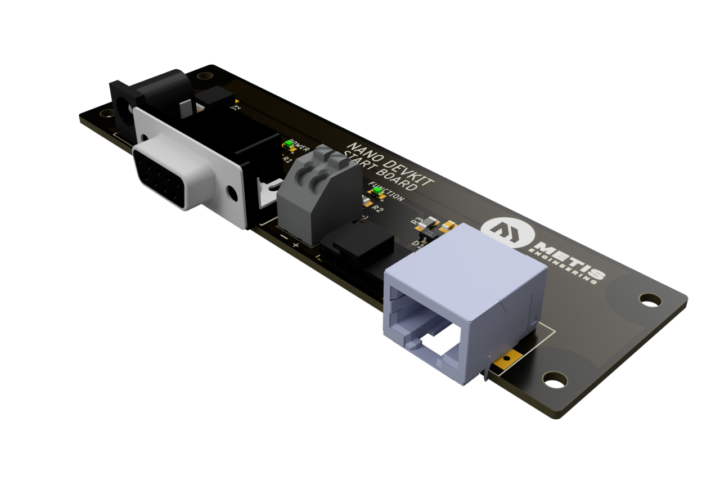
 This is precisely the challenge that Cell Guard, developed by Metis Engineering, is designed to solve. Rather than inferring what might be happening inside a battery pack from external electrical measurements, Cell Guard monitors the environment within the pack directly — detecting the gases, pressure changes, and atmospheric signals that precede thermal runaway at the cell level.
The difference in response time is transformative. Where a conventional BMS may provide warning in the order of minutes to hours after a fault begins to develop, Cell Guard can detect the earliest indicators of thermal runaway in seconds. That is not an incremental improvement — it is a fundamentally different category of protection.
For manufacturers like Volvo, this kind of technology offers something no software update or charge-limiting advisory can: genuine early warning capability that operates independently of whether the root cause is a manufacturing defect, a charging anomaly, or physical damage sustained in service. It provides the seconds that matter most — time for a driver to pull over, for an alert to be transmitted, for a potential catastrophe to become a manageable incident.
A Broader Industry Imperative
The Volvo EX30 recall is not an isolated incident. General Motors suffered significant financial and reputational damage when it was forced to recall 140,000 Chevy Bolts, and Nissan has recalled tens of thousands of Leaf EVs for battery issues. InsideEVs Battery safety, as one industry observer put it, is a zero-tolerance arena. Consumers and regulators will not accept repeated failures, and the financial exposure — Volvo faces an estimated $195 million in battery module replacement costs alone Electrek — underscores what is at stake.
The EV industry has made extraordinary progress in battery performance, range, and charging speed. But safety technology has not kept pace with the complexity of the packs we are now putting into vehicles at scale. A BMS designed for performance optimisation was never intended to be the last line of defence against thermal runaway.
Cell Guard represents the next generation of that defence — not as a replacement for good engineering and rigorous manufacturing processes, but as the independent, real-time sentinel operating inside the pack, ready to provide the seconds of warning that can save lives.
The question for every EV manufacturer is no longer whether cell-level environmental monitoring is necessary. The Volvo EX30 recall has made that case for us. The question is how quickly the industry chooses to act on it.