HVAC Sensors: Types, Benefits and Why AirWise Sets a New Standard
Heating, ventilation and air conditioning (HVAC) systems are the lungs of any building, vehicle or industrial facility. But a system is only as smart as the sensors feeding it data. Without accurate, real-time environmental monitoring, HVAC systems are guessing: running on fixed schedules, wasting energy and leaving occupants exposed to air quality risks that are invisible to the naked eye.
This guide covers everything you need to know about HVAC sensors: the key types, the parameters they monitor, the benefits they deliver and why the Metis Engineering AirWise represents the next generation of HVAC sensing technology.
What Are HVAC Sensors and Why Do They Matter?
HVAC sensors are devices that measure specific environmental parameters within a space or system, providing the data that control units need to make intelligent adjustments. They are, in effect, the nervous system of any HVAC installation: constantly gathering information so the system can respond dynamically rather than operating on assumptions.
The parameters that matter most in HVAC applications include:
- Air temperature
- Relative humidity and dew point
- Absolute pressure
- Carbon dioxide (CO2) concentration
- Volatile organic compounds (VOCs)
- Nitrogen oxides (NOx)
- Absolute air moisture content
- Mechanical shock and vibration (for equipment integrity monitoring)
Monitoring these parameters enables HVAC systems to maintain healthy indoor air quality (IAQ), minimise energy consumption, comply with environmental regulations and trigger automated safety responses when thresholds are exceeded.
“Air quality monitoring is no longer optional. In an era of heightened environmental awareness, the data your HVAC sensor provides is the foundation of smarter, safer buildings and vehicles.” – Metis Engineering
Key Types of HVAC Sensors: What Each One Measures
1. Temperature Sensors
Temperature is the most fundamental HVAC parameter. Temperature sensors measure the ambient air temperature within a space or the temperature of fluids in pipework and ductwork, feeding this data back to control systems to regulate heating and cooling cycles.
Common technologies include thermocouples (wide temperature range, ideal for industrial environments), thermistors (high sensitivity for precision residential applications) and resistance temperature detectors (RTDs), which offer exceptional accuracy over a stable range. A high-quality HVAC sensor will cover an operating range of at least -40°C to +125°C to accommodate both sub-zero winter conditions and high-heat industrial settings.
2. Humidity Sensors
Humidity sensors, or hygrometers, measure the moisture content in the air. Maintaining optimal relative humidity is critical: too high and you create the conditions for mould growth, corrosion and occupant discomfort; too low and you risk respiratory irritation, static discharge and damage to sensitive materials.
Advanced HVAC sensors go beyond relative humidity to also report dew point temperature and absolute air water content. Dew point is especially valuable in industrial and vehicle applications because it indicates the exact temperature at which condensation will form on surfaces, allowing HVAC systems to prevent damaging moisture ingress before it occurs.
3. Pressure Sensors
Pressure sensors monitor air or fluid pressure within HVAC ductwork, compressors and refrigeration circuits. They ensure systems are operating within designed parameters, help detect blockages or leaks early and allow technicians to diagnose faults without invasive inspection.
In compressed air equipment, dryers and compressors, absolute pressure monitoring is particularly critical. Typical HVAC-grade pressure sensors should cover a range of 0.3 to 1.2 Bar for most applications.
4. CO2 Sensors
Carbon dioxide is the most widely used proxy for occupancy-driven ventilation control. As the number of people in a space increases, CO2 levels rise. When CO2 exceeds roughly 1,000 ppm, occupants begin to report reduced cognitive performance, fatigue and discomfort. Well-calibrated CO2 sensors allow HVAC systems to increase fresh air supply precisely when and where it is needed, rather than running continuously at full capacity.
CO2 monitoring is increasingly mandated by building regulations and indoor air quality standards across Europe and globally, making it an essential feature in any modern HVAC sensor.
5. VOC Sensors
Volatile organic compounds are emitted by a vast range of sources: cleaning products, paints, adhesives, furnishings, vehicle exhaust and industrial processes. Many VOCs are harmful to health at elevated concentrations, contributing to sick building syndrome, respiratory irritation and long-term health risks.
VOC sensors detect the cumulative concentration of organic compounds in the air, triggering ventilation increases when levels climb above safe thresholds. They are particularly valuable in vehicle cabins, office environments and any setting where chemical exposure may occur.
6. NOx Sensors
Nitrogen oxide monitoring has become increasingly important as awareness of emissions compliance grows. NOx compounds are generated by combustion processes including gas boilers, vehicle engines and industrial burners. Elevated NOx in indoor environments is associated with respiratory disease, and in regulated environments exceeding safe limits can result in compliance failures and penalties.
NOx sensors in HVAC applications allow facility managers to detect when combustion appliances or external pollution sources are driving NOx levels dangerously high, triggering ventilation responses before thresholds are breached.
7. Shock and Vibration Sensors (Accelerometers)
While not a traditional HVAC parameter, shock monitoring has significant value in applications where the sensor or the equipment it monitors may be subject to mechanical events: vehicle impacts, compressor failure, or structural disturbances. An accelerometer integrated into an HVAC sensor can flag events that may have compromised system components, enabling proactive inspection rather than waiting for a fault to become a breakdown.
The Benefits of Advanced HVAC Sensors
Enhanced Energy Efficiency
Fixed-schedule HVAC operation is inherently wasteful. Sensors enable demand-controlled ventilation and heating, meaning systems operate at the intensity required by actual conditions rather than by assumption. CO2-triggered ventilation alone can reduce energy consumption significantly in commercial buildings, while humidity and temperature data prevent overcooling, overheating and unnecessary dehumidification cycles. The result is lower operating costs and a reduced carbon footprint.
Improved Indoor Air Quality
IAQ has a direct, measurable impact on occupant health and productivity. Studies consistently show that elevated CO2 and VOC levels impair cognitive function, while poor humidity control increases the transmission of airborne pathogens. HVAC sensors that monitor the full range of air quality parameters give building managers the data to maintain genuinely healthy environments, not just compliant ones.
Regulatory Compliance
Emissions regulations and indoor air quality standards are tightening across all sectors. NOx and CO2 monitoring supports compliance with environmental legislation, while detailed sensor logs provide the audit trail that inspections and certifications increasingly require. In vehicle applications, in-cabin air quality standards are evolving rapidly alongside the shift to electrification.
Predictive Maintenance
Pressure anomalies, unexpected humidity spikes and shock events are all early indicators of equipment problems. HVAC sensors that capture this data continuously enable predictive maintenance strategies: identifying faults before they escalate into costly failures, reducing downtime and extending the operational life of expensive plant.
Automated Safety Responses
The most advanced HVAC sensors do not just report data; they can trigger responses. When a threshold is crossed, an integrated output can activate a ventilation fan, send an alert to a control system or shut down a process. This moves HVAC management from reactive to proactive, with real safety consequences in environments where air quality exceedances pose genuine risk.
Introducing AirWise: The Next-Generation HVAC Sensor from Metis Engineering
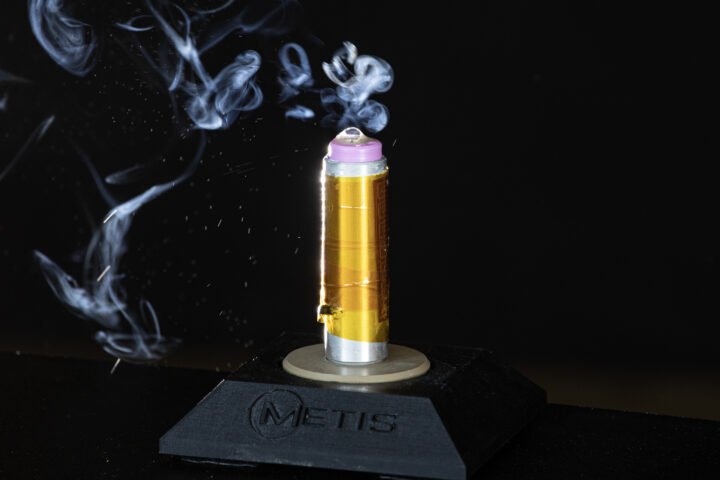
Most HVAC sensors address one or two of the parameters described above. The Metis Engineering AirWise addresses all of them in a single, compact, automotive-grade unit. Designed and manufactured in the UK, AirWise is a CAN-based air quality monitoring sensor built for environments where performance, reliability and seamless integration are non-negotiable.
What AirWise Measures
AirWise delivers comprehensive, real-time environmental data across the full range of parameters that matter in HVAC applications:
- Air temperature: -40°C to +125°C, covering the full range from arctic outdoor conditions to high-heat industrial environments.
- Absolute pressure: 3 to 1.2 Bar, providing precise atmospheric and duct pressure data.
- Relative humidity: 0% to 100%, continuous monitoring across the full humidity spectrum.
- Dew point temperature: 0 to 100°C, enabling active condensation prevention.
- Absolute air water content: Going beyond relative humidity to give a physically accurate measure of moisture in the air.
- VOC concentration: Detection of volatile organic compounds with accuracy achievable from -10°C to +50°C, supporting both cabin air quality and industrial safety monitoring.
- CO2 levels: Real-time carbon dioxide measurement for demand-controlled ventilation and occupancy management.
- NOx concentration: Nitrogen oxide detection supporting emissions compliance and indoor combustion monitoring.
- Impact shock (optional): Up to ±24G accelerometer capability, allowing AirWise to monitor structural or mechanical events affecting HVAC components, compressors or vehicle integrity.
CAN Bus Integration: Built for Real Systems
Unlike generic air quality monitors designed for simple data logging, AirWise is engineered for integration. Its CAN bus communication interface connects directly to vehicle networks, building management systems and industrial control platforms without requiring additional gateways or protocol converters. Configurable CAN bus speed and addressing mean AirWise can be adapted to the specific requirements of any installation, and a supplied CAN DBC file simplifies setup significantly.
The sensor connects via an automotive-rated 5-pin Molex Nano-Fit Power connector and has been validated at default settings of 500 kbps with start address 0x30A, using seven consecutive CAN addresses. This standardised, configurable interface makes AirWise compatible with a wide range of platforms: passenger and commercial vehicles, off-highway machinery, autonomous pods, compressed air equipment, compressors and dryers across any number of industries.
Low Power Monitoring Mode
Power efficiency is a significant consideration in both vehicle and remote industrial applications. AirWise features a low power monitoring mode in which the sensor passively collects environmental data without transmitting on the CAN bus unless a predefined threshold is crossed. At that point it automatically switches to active mode, ensuring minimal energy consumption while maintaining constant situational awareness. This makes AirWise suitable for battery-powered and always-on monitoring applications where power draw must be minimised.
Actuator Output: From Observation to Response
One of AirWise’s most distinctive capabilities is its low side drive function pin, rated up to 500mA. This output can be configured to trigger when an environmental threshold, such as a VOC concentration spike or a temperature exceedance, is crossed. The result is a sensor that not only observes but can also actuate a response: activating a ventilation fan, sending an alert to a compressor’s control system or initiating a safety protocol in a vehicle or building management system.
This transforms AirWise from a monitoring device into an active participant in system safety, enabling automated responses to air quality events without human intervention.
Automotive-Grade Reliability
Metis Engineering has ensured that AirWise meets the rigorous demands of vehicle and industrial integration. The sensor has been tested to leading automotive standards including ISO 7637-2:2011 for electrical disturbances from conduction and coupling, and ISO 16750-2:2012 for environmental conditions and testing for electrical and electronic equipment. This testing validates AirWise for use in both interior and under-hood environments, as well as the harsher conditions found in off-highway and industrial settings.
AirWise is not a laboratory instrument adapted for the field. It is an automotive-grade sensor designed from the ground up for real-world environments where vibration, temperature extremes, electrical noise and mechanical shock are everyday conditions.
AirWise Applications: Where It Makes a Difference
Vehicle Cabins and Passenger Transport
In passenger vehicles, autonomous pods and commercial transport, AirWise monitors the full in-cabin environment. VOC and CO2 levels trigger fresh air intake; NOx monitoring detects ingress of external combustion pollution; temperature, humidity and dew point data feed climate control systems for precise occupant comfort. As in-cabin air quality standards tighten alongside the shift to electrification, AirWise provides the multi-parameter monitoring that modern mobility demands.
Off-Highway and Industrial Machinery
Construction equipment, agricultural machinery and industrial vehicles operate in environments where air quality, mechanical integrity and system reliability are safety-critical. AirWise’s broad temperature range, shock monitoring capability and robust automotive-grade design make it suited to these demanding conditions. Its CAN bus interface integrates seamlessly with the vehicle networks already present in modern off-highway equipment.
HVAC Systems in Commercial Buildings
Facility managers responsible for offices, educational buildings, healthcare facilities and retail environments use AirWise to deliver demand-controlled ventilation based on actual CO2 and VOC levels rather than fixed schedules. NOx monitoring supports compliance reporting, while dew point and humidity data protect building fabric from condensation damage. Multi-zone deployments are supported by the sensor’s flexible CAN addressing.
Compressed Air, Compressors and Dryers
In compressed air systems and industrial dryers, maintaining precise humidity and pressure monitoring is essential to both process quality and equipment longevity. AirWise provides the multi-parameter data these applications require in a single integrated unit, reducing installation complexity and maintenance overhead.
Battery Energy Storage Systems
Air quality monitoring plays an increasingly important role in battery safety. Changes in VOC concentration, humidity and pressure within battery enclosures can indicate the early stages of cell degradation or thermal runaway. AirWise can provide this environmental monitoring layer as part of a comprehensive battery management approach.
Frequently Asked Questions About HVAC Sensors
What is the most important sensor in an HVAC system?
There is no single most important sensor: effective HVAC management requires data from multiple parameters. Temperature sensors set the baseline for comfort control, but CO2 and VOC sensors are essential for air quality management, humidity sensors protect against mould and condensation, and pressure sensors ensure mechanical integrity. The most capable HVAC monitoring solutions, like the Metis Engineering AirWise, integrate all of these into a single device.
How do HVAC sensors improve energy efficiency?
By providing real-time data on actual conditions rather than assumptions, HVAC sensors enable demand-controlled operation. Systems run at the intensity required by measured CO2, humidity and temperature levels rather than following fixed schedules. This eliminates unnecessary operation and reduces energy consumption, often substantially in commercial applications.
What is a CAN bus HVAC sensor?
A CAN bus HVAC sensor uses the Controller Area Network (CAN) communication protocol, the standard used in automotive and industrial systems, to transmit sensor data to control units and management systems. CAN bus sensors like AirWise offer configurable addressing and bus speed, making them compatible with a wide range of platforms. They eliminate the need for proprietary interfaces or signal converters, simplifying integration and reducing installation costs.
Why monitor dew point in HVAC systems?
Dew point is the temperature at which moisture in the air condenses into liquid. In HVAC systems, knowing the dew point allows climate control systems to prevent condensation from forming on cold surfaces, which can cause corrosion, mould growth and electrical faults. In vehicle applications, dew point monitoring helps protect battery systems and electronic components from damaging moisture ingress.
What is the difference between VOC and NOx sensors in HVAC?
VOC sensors detect volatile organic compounds, which are emitted by a wide range of materials and products and can cause respiratory irritation and health effects at elevated concentrations. NOx sensors detect nitrogen oxides, which are primarily produced by combustion processes. Both are important air quality indicators, but they indicate different sources of pollution. AirWise monitors both, providing a comprehensive picture of in-space air quality.
Can an HVAC sensor trigger automatic ventilation?
Yes, and this is one of AirWise’s most valuable features. The sensor’s low side drive function pin can be configured to activate an output, such as a ventilation fan or an alert signal, when a specified environmental threshold is crossed. This enables fully automated air quality management without requiring human monitoring or intervention.
Conclusion: Smarter HVAC Monitoring Starts With the Right Sensor
The HVAC industry is moving rapidly towards data-driven, demand-controlled systems that respond to real environmental conditions rather than fixed schedules. Meeting that ambition requires sensors that are comprehensive, reliable, and genuinely integrated with the systems they serve.
The Metis Engineering AirWise delivers all of the parameter coverage that modern HVAC applications require: temperature, pressure, humidity, dew point, absolute moisture content, VOCs, CO2, NOx and optional shock monitoring, all in a single compact unit with automotive-grade reliability, CAN bus integration, low power operation and an active output for automated responses.
For engineers, facility managers and system designers who need more than a basic sensor, AirWise represents a significant step forward in what HVAC environmental monitoring can achieve.
Explore the AirWise technical specifications or contact the Metis Engineering team to discuss your application.