
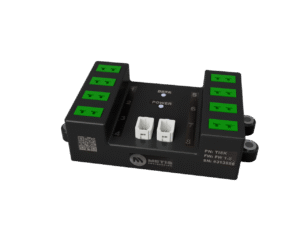
 Temperature measurement forms the foundation of critical processes across automotive testing, industrial manufacturing, and research applications. Yet many temperature monitoring systems struggle with a fundamental challenge: how to accurately measure multiple temperature points simultaneously whilst maintaining electrical isolation and seamless integration with modern control networks. Metis Engineering’s 8 Channel Isolated Thermocouple to CAN module addresses this challenge through advanced isolation technology and intelligent CAN bus integration, delivering laboratory-grade accuracy in industrial environments.
Understanding thermocouple technology and its industrial applications
Thermocouples have served as the workhorses of industrial temperature measurement since German physicist Thomas Johann Seebeck discovered the thermoelectric effect in 1821. These devices operate on an elegantly simple principle: when two dissimilar metals join at a junction and experience a temperature difference, they generate a measurable voltage proportional to that difference. This voltage, typically in the microvolt range, provides accurate temperature data across extraordinarily wide ranges—from cryogenic applications at -270°C to extreme high-temperature processes exceeding 3,000°C.
The fundamental advantage of thermocouples lies in their self-powered operation. Unlike resistance temperature detectors or semiconductor sensors, thermocouples require no external excitation voltage. This characteristic makes them particularly suitable for hazardous environments, remote locations, and applications where electrical power availability presents challenges. Their robust construction, rapid response times, and proven reliability in harsh conditions explain their ubiquitous presence in gas turbine monitoring, diesel engine testing, kiln operations, and countless other industrial processes.
However, raw thermocouple signals present several measurement challenges. The microvolt-level outputs require careful amplification and signal conditioning. Ambient temperature variations at reference junctions introduce measurement errors unless properly compensated. Most critically for modern systems, multiple measurement points typically require complex wiring schemes and careful attention to maintaining electrical isolation between measurement channels.
The critical importance of electrical isolation in temperature measurement
Electrical isolation represents far more than a technical specification—it constitutes a fundamental requirement for accurate, reliable temperature measurement in real-world industrial applications. Ground loops, which occur when multiple measurement points share common electrical paths, introduce voltage offsets that corrupt temperature readings. In automotive testing environments, where battery systems operate at hundreds of volts and sensitive control electronics coexist with high-power drive systems, maintaining isolation prevents catastrophic equipment damage whilst ensuring measurement integrity.
The Metis Engineering 8 Channel Isolated Thermocouple to CAN module provides 1,000VDC isolation on each measurement channel. This specification translates to practical advantages across diverse applications. In electric vehicle battery testing, engineers can simultaneously monitor individual cell temperatures whilst the pack operates at 400V or higher without risking measurement corruption or safety hazards. Industrial process control systems benefit from the ability to measure temperatures in electrically noisy environments—near variable frequency drives, switching power supplies, or arc welding operations—without signal degradation.
Isolation also enables flexible sensor placement. Without channel-to-channel isolation, thermocouple positioning must account for potential electrical connections through monitored components or mounting structures. Isolated channels eliminate these constraints, allowing engineers to optimise sensor placement based purely on thermal considerations rather than electrical topology.
Comprehensive temperature measurement across extreme ranges
Type K thermocouples, the industry standard selected for Metis Engineering’s default configuration, deliver reliable performance from -200°C to +1,372°C. This chromel-alumel pairing offers approximately 41 microvolts per degree Celsius sensitivity—sufficient for precise measurement whilst maintaining robustness against electrical interference. The module’s compatibility with eight standardised thermocouple types (K, J, T, N, S, E, B, and R) provides application flexibility spanning cryogenic research through to high-temperature industrial processes.
Temperature measurement accuracy directly impacts process control effectiveness, product quality, and safety margins. The module achieves typical accuracy of ±0.5°C across the 0 to 85°C range, expanding to ±1°C typical accuracy from -40 to 125°C. These specifications meet or exceed requirements for most industrial applications whilst the maximum accuracy specifications of ±1.5°C and ±3°C respectively provide conservative design margins.
The 40Hz per-channel sampling rate supports dynamic temperature monitoring. In automotive powertrain testing, engineers can observe thermal transients during acceleration events. Manufacturing process control benefits from the rapid detection of temperature deviations before they cascade into quality issues. Research applications requiring detailed thermal mapping obtain high temporal resolution data for computational model validation.
Intelligent fault detection for system reliability
Temperature measurement systems operate in demanding environments where sensor failures, wiring damage, and connection issues inevitably occur. The module’s integrated open-circuit and short-circuit detection transforms these failure modes from silent data corruption into diagnosed, reportable conditions. When a thermocouple wire breaks or a connector loosens, the system immediately identifies the specific affected channel rather than reporting spurious temperature values that might trigger inappropriate control actions.
Short-circuit detection identifies conditions where thermocouples contact ground or power rails—situations that generate incorrect readings whilst potentially indicating more serious mechanical or insulation failures requiring investigation. This diagnostic capability proves particularly valuable in vibration-exposed applications such as automotive testing, where mechanical stress gradually degrades connections, and in high-temperature industrial processes where thermal cycling fatigues sensor assemblies.
Early fault detection reduces system downtime by enabling predictive maintenance. Rather than discovering sensor failures during critical test runs or production cycles, automated monitoring systems can flag degraded channels during routine operation, allowing scheduled replacement during planned maintenance windows. For safety-critical applications, the diagnostic capability provides essential verification that temperature monitoring remains fully functional.
Seamless CAN bus integration for modern control architectures
Controller Area Network (CAN) bus technology dominates automotive electronics whilst finding increasing adoption in industrial automation, aerospace systems, and research instrumentation. Originally developed for automotive applications, CAN provides robust, deterministic communication even in electrically noisy environments. The protocol’s proven reliability, standardised implementation, and moderate bandwidth requirements make it ideal for distributed sensor networks.
The Metis Engineering module’s native CAN bus interface eliminates the need for separate data acquisition systems, simplifying system architecture whilst reducing points of failure. Configurable CAN bus speeds accommodate integration into existing networks, from slower industrial control systems to high-speed automotive development platforms. The supplied DBC (Database CAN) file defines message formats and signal mappings, enabling rapid integration with standard CAN analysis tools including Vector CANalyzer, PEAK PCAN-View, and open-source alternatives.
Addressing flexibility supports complex networks. Each module accepts independent address configuration, allowing up to 128 modules to coexist on a single CAN bus—enabling systems with over 1,000 temperature measurement points using standardised wiring infrastructure. This scalability proves essential for comprehensive thermal management in electric vehicle battery packs, where hundreds of cells require individual temperature monitoring, and for industrial process control where temperature profiles across large thermal masses inform control algorithms.
The daisy-chain connectivity through dual IP67-rated JWPF connectors simplifies installation. Rather than running separate CAN bus drops to each measurement module, installers can route a single backbone with short branches to measurement points. This topology reduces wiring complexity, improves system reliability by minimising connection points, and facilitates modular system expansion as measurement requirements evolve.
DIN rail mounting for industrial integration
Industrial environments demand mounting solutions that accommodate space constraints, facilitate maintenance, and withstand vibration and thermal cycling. The module’s DIN rail compatibility provides standardised installation aligned with industrial control panel practices worldwide. Maintenance technicians familiar with DIN rail systems can confidently install, troubleshoot, and replace modules without specialised training or custom mounting hardware.
DIN rail mounting enables clean, organised panel layouts where temperature monitoring modules install adjacent to related control equipment, reducing wiring runs and simplifying system documentation. The compact form factor conserves valuable panel space whilst the rigid mechanical interface ensures reliable electrical connections despite vibration exposure common in industrial facilities.
Wide supply voltage range for application flexibility
The module’s 9 to 32V DC input specification accommodates diverse power architectures. Automotive systems typically operate on 12V nominal (14.4V charging) or increasingly 48V electrical systems for hybrid applications. Industrial control systems standardise around 24V DC power distribution. Research facilities may employ various voltage standards depending on legacy equipment and available power supplies.
Accepting this wide voltage range eliminates the need for additional power conversion equipment, reducing system complexity, cost, and potential failure points. Direct connection to vehicle electrical systems simplifies automotive test cell installations. Industrial facilities can integrate the module into existing 24V control circuits without additional power supplies. The tolerance for voltage variations accommodates fluctuations common in practical electrical systems without compromising measurement performance.
Target applications and industry sectors
Automotive and motorsport testing
Electric vehicle development demands comprehensive thermal management. Battery cells experience significant temperature rise during fast charging and high-power discharge. Thermal gradients within packs indicate cooling system effectiveness and identify potential failure modes before they propagate. Individual cell monitoring enables precise state-of-charge estimation, optimises charging algorithms, and provides early warning of thermal runaway conditions.
Powertrain testing requires detailed temperature mapping across electric motors, inverters, and transmission components. Understanding thermal behaviour informs cooling system design, validates computational fluid dynamics models, and verifies component operating margins. The module’s multi-channel capability enables simultaneous monitoring of winding temperatures, bearing temperatures, cooling fluid conditions, and ambient air temperatures—providing comprehensive datasets for design optimisation.
Motorsport applications push temperature monitoring requirements to extremes. Brake disc temperatures can exceed 800°C during heavy braking events. Exhaust gas temperatures inform engine tuning decisions. Tyre temperatures affect grip levels and compound selection. The module’s high sampling rate captures transient thermal events whilst its rugged construction withstands the vibration and electrical noise characteristic of racing environments.
Industrial process control
Manufacturing processes across metallurgy, chemical production, food processing, and polymer fabrication rely on precise temperature control. In steel production, temperature monitoring guides annealing cycles, quenching operations, and rolling mill conditions. Chemical reactors require careful temperature regulation to maintain reaction rates whilst preventing runaway exothermic conditions. Injection moulding operations balance cycle time against part quality through precise thermal management.
The module’s multi-channel capability enables distributed temperature measurement throughout process equipment. Rather than relying on single-point measurements that may miss critical temperature variations, engineers can monitor temperature profiles that reveal thermal gradients, hot spots, and inefficiencies. CAN bus integration allows temperature data to feed directly into programmable logic controllers and supervisory control systems, enabling closed-loop control strategies that optimise process parameters in real time.
Aerospace and defence systems
Aircraft environmental control systems, engine monitoring, and thermal management for avionics equipment require reliable temperature measurement in demanding conditions. Altitude changes create significant ambient temperature variations. Vibration from engines and turbulence challenges sensor mounting and signal integrity. The module’s rugged construction and electrical isolation ensure measurement reliability despite these challenges.
Military vehicle development shares requirements with automotive applications whilst introducing additional constraints around electromagnetic compatibility, shock resistance, and operational temperature extremes. The module’s wide operating temperature range and robust design meet these demands whilst its DIN rail mounting facilitates installation in standard military equipment racks.
Research and development facilities
Academic and commercial research laboratories conducting materials characterisation, thermal analysis, and energy systems development benefit from the module’s combination of measurement accuracy, multi-channel capability, and data integration. Researchers investigating novel battery chemistries can monitor temperature distributions during charge-discharge cycling. Materials scientists studying phase transformations track temperature evolution during thermal treatments. Energy researchers validating heat exchanger designs map temperature profiles across test articles.
The CAN bus interface simplifies data acquisition for multi-channel experiments. Rather than managing multiple data acquisition cards, researchers can deploy distributed temperature measurement nodes throughout experimental setups, routing data over a single CAN bus to logging computers. The supplied DBC file enables rapid integration with data acquisition software, reducing experimental setup time and allowing researchers to focus on scientific objectives rather than instrumentation details.
Practical implementation considerations
Thermocouple selection and installation
Selecting appropriate thermocouple types requires balancing temperature range requirements, chemical compatibility, and cost considerations. Type K thermocouples serve most general-purpose applications effectively through their combination of wide temperature range, reasonable accuracy, and economy. Type J thermocouples offer higher sensitivity for moderate-temperature applications where increased resolution matters. Type T thermocouples suit cryogenic applications and differential temperature measurements owing to their copper-constantan construction. High-temperature applications exceeding 1,200°C may require Type S, R, or B noble metal thermocouples despite their higher cost and lower sensitivity.
Proper thermocouple installation critically affects measurement accuracy. Thermal mass at the measurement junction must remain small relative to the measured object to ensure rapid response and minimal thermal disturbance. Junction placement should target locations representative of the temperatures of interest rather than positions convenient for routing. Conductive heat transfer along thermocouple leads can introduce errors; immersion depth should exceed ten times wire diameter to minimise these effects.
The module ships with standard miniature thermocouple connectors, enabling straightforward replacement of sensors without rewiring. This serviceability advantage proves valuable in applications where thermocouples experience wear from thermal cycling, chemical exposure, or mechanical stress. Standardised connectors also support sensor calibration programmes where thermocouples rotate between in-service use and laboratory verification.
Network configuration and data management
Configuring CAN bus networks requires attention to termination, node addressing, and message timing. Networks require 120-ohm termination resistors at both ends of the bus to prevent signal reflections that corrupt communications. When daisy-chaining multiple modules, termination should occur at the first and last modules in the chain rather than at intermediate units.
Node addressing must be unique within each CAN network. The module’s configurable addressing supports systematic numbering schemes that correlate with physical installation locations, simplifying system troubleshooting and maintenance. Documentation should clearly map CAN node addresses to physical sensor locations, thermocouple types installed, and measurement point designations.
The supplied DBC file defines message structures and scaling factors for temperature data. Standard CAN analysis tools import these definitions, automatically decoding raw CAN messages into engineering units. For custom software implementations, the DBC file provides complete specifications for parsing temperature data, implementing fault detection logic, and formatting human-readable displays.
Integration with existing systems
Adding temperature monitoring capability to existing control systems requires evaluating available CAN bus bandwidth and message timing requirements. The module transmits data for eight temperature channels; systems must ensure sufficient network capacity remains for this traffic without compromising existing communications. Most industrial and automotive CAN networks operate well below capacity limits, accommodating additional nodes without difficulty.
Software integration depends on control system architecture. Programmable logic controllers with native CAN support can receive temperature data directly through standardised communication blocks. SCADA systems may require gateway devices that translate between CAN protocols and plant networks. Embedded control systems should implement appropriate filtering logic to extract temperature data from network traffic whilst handling diagnostic messages indicating sensor faults.
Real-time operating system applications should consider message priority structures. Temperature measurement typically operates at moderate update rates where precise timing matters less than data integrity. Configuring temperature messages at appropriate priority levels ensures control-critical communications maintain precedence whilst temperature monitoring operates reliably during normal conditions.
Performance verification and calibration
Temperature measurement systems require periodic verification to ensure continued accuracy. While thermocouple drift primarily affects sensor elements rather than signal conditioning electronics, complete system calibration validates end-to-end performance including connections, signal processing, and data transmission.
Reference thermometers provide comparison standards for verification. Immersing the module’s thermocouples alongside calibrated reference probes in temperature-controlled baths enables direct comparison. Practical calibration typically focuses on temperature points within the application operating range rather than attempting to characterise performance across the full specification range.
Documentation of calibration results supports quality systems and regulatory compliance. Recording calibration dates, reference standards used, measured deviations, and corrective actions provides traceability essential for ISO 9001 certification, automotive quality standards, and pharmaceutical manufacturing regulations. The module’s channel-by-channel isolation ensures that individual channel calibration results remain independent; recalibrating one sensor does not affect others.
Comparative advantages and competitive positioning
The isolated thermocouple to CAN module occupies a specialised niche within industrial temperature measurement. Compared to traditional thermocouple amplifiers feeding analogue inputs on data acquisition systems, the module offers simplified wiring, reduced installation costs, and enhanced reliability through CAN bus communication. The electrical isolation per channel exceeds typical multi-channel data acquisition cards where channels share common ground references.
Alternative approaches to multi-point temperature measurement include wireless sensor networks and distributed analogue modules with separate communication protocols. Wireless systems avoid cabling costs but introduce power supply challenges, potential communication dropouts, and update rate limitations. Analogue modules require dedicated wiring for each measurement point back to central acquisition systems, creating complex wiring harnesses particularly problematic in harsh industrial environments.
The module’s price point reflects its technical sophistication—isolated amplification, digital signal processing, CAN bus communication, and fault diagnostics represent significantly more capability than simple thermocouple interfaces. For applications requiring these features, the investment delivers substantial value through reduced installation complexity, improved measurement reliability, and simplified system architecture. Applications with modest channel counts and basic requirements may find simpler solutions more economical.
Future developments and technology trends
Temperature measurement technology continues evolving alongside broader digitisation of industrial control systems. Integration with Industrial Internet of Things platforms, predictive maintenance algorithms, and cloud-based analytics increasingly complements traditional control applications. Modern temperature monitoring modules may incorporate local data logging, edge computing capabilities for real-time anomaly detection, and cybersecurity features protecting measurement data integrity.
Thermocouple technology itself remains relatively mature, with recent developments focusing on specialised alloys for niche applications rather than fundamental breakthroughs. Miniaturisation enables increasingly compact sensor designs for space-constrained applications. Thin-film thermocouples fabricated on substrates provide exceptionally fast response times for dynamic measurements. These emerging thermocouple types integrate seamlessly with modules supporting standard miniature connectors.
Communication protocol evolution may eventually transition some applications from CAN bus to newer standards such as CAN FD (Flexible Data Rate) offering higher bandwidth, or Ethernet-based industrial protocols providing even greater data rates and native internet connectivity. However, standard CAN’s proven reliability, widespread adoption, and adequate performance for temperature measurement applications ensure its continued dominance for the foreseeable future.
Conclusion: Enabling precision measurement in demanding applications
Accurate, reliable temperature measurement underpins critical processes across automotive testing, industrial manufacturing, and research applications. Metis Engineering’s 8 Channel Isolated Thermocouple to CAN module addresses the practical challenges of multi-point temperature monitoring through proven thermocouple technology, robust electrical isolation, and intelligent CAN bus integration.
The module’s combination of laboratory-grade accuracy (±0.5°C typical), comprehensive electrical isolation (1,000VDC per channel), extensive temperature range capability (-200°C to +1,800°C depending on thermocouple type), and seamless network integration positions it as an effective solution for applications where measurement quality, system reliability, and installation efficiency matter.
Engineers and system integrators evaluating temperature monitoring solutions should consider the total cost of ownership beyond initial hardware acquisition costs. Simplified installation through DIN rail mounting and daisy-chain connectivity reduces labour expenses. CAN bus integration eliminates separate data acquisition infrastructure. Fault detection capabilities enable predictive maintenance, minimising unexpected downtime. For applications where these factors align with requirements, isolated thermocouple to CAN technology delivers compelling value.
The module exemplifies the broader trend toward intelligent, networked sensors that integrate seamlessly into modern control architectures whilst maintaining the fundamental accuracy and reliability that industrial applications demand. As systems grow more complex and interconnected, measurement solutions combining proven sensing principles with sophisticated communication capabilities increasingly separate themselves from commodity alternatives.
Temperature monitoring requirements will continue evolving alongside the systems and processes they serve. Electric vehicle development, industrial automation, and advanced manufacturing all drive demand for more comprehensive, more accurate, and more intelligent temperature measurement. Solutions that address these needs whilst maintaining practical considerations around installation, maintenance, and integration position themselves for continued relevance as technology advances and applications evolve.

