Beyond Temperature and Voltage: The Critical Safety Gap in Traditional Battery Monitoring
Battery Management Systems (BMS) have become the central nervous system of lithium-ion battery packs, monitoring cell voltages and temperatures to ensure safe operation within defined parameters. These systems excel at protecting batteries from electrical abuse—preventing overcharging, over-discharging, and managing current limits. Yet despite their sophistication, traditional BMS architectures possess a fundamental limitation: they cannot detect the earliest physical indicator of catastrophic battery failure.
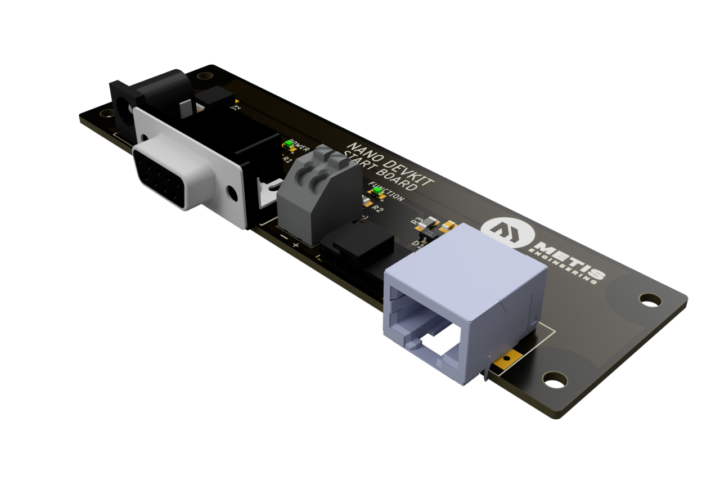
When lithium-ion cells begin failing, they release volatile organic compounds (VOCs) and vent gases several minutes before temperature rises become detectable. This critical early warning window—the difference between preventing thermal runaway and merely responding to it—remains invisible to conventional BMS technology. Metis Engineering’s Cell Guard battery safety sensor addresses this gap by providing continuous environmental monitoring that detects cell venting at the earliest possible stage, transforming battery safety from reactive to preventative.
Understanding Traditional Battery Management Systems: Capabilities and Constraints
A Battery Management System serves as the protective oversight layer for battery packs, continuously monitoring individual cells or modules within the assembly. According to industry standards, BMS technology typically encompasses five core functions: monitoring battery parameters, providing electrical protection, estimating operational state, optimizing performance, and reporting status to external systems.
The electrical protection capabilities of a BMS are comprehensive and well-established. These systems monitor pack current and cell voltages to prevent operation outside the safe operating area defined by cell manufacturers. Sophisticated BMS implementations track peak current demands, integrate current over time to prevent excessive exposure, and command graduated responses—from reducing available current to completely interrupting pack current when thresholds are exceeded.
Voltage management operates with similar precision. BMS technology requests gradual reduction of charging current as cells approach upper voltage limits and restricts current demands when cells near lower voltage thresholds. These electrical safeguards effectively prevent the voltage and current abuse that can damage lithium-ion cells.
Thermal management represents another key BMS function. Temperature sensors distributed throughout the battery pack enable the BMS to activate heating or cooling systems, maintaining cells within optimal operating ranges. This thermal oversight protects against low-temperature charging—which can cause lithium plating on anodes—and prevents capacity degradation from excessive heat during operation.
Capacity management through cell balancing ensures uniform state-of-charge across all cells in a pack. This prevents individual cells from reaching charge limits prematurely whilst others remain partially charged, maximising available pack capacity and preventing premature wear on specific cells.
The Detection Gap: What Traditional BMS Cannot See
Despite these capabilities, traditional BMS architectures possess significant limitations when confronting the most dangerous battery failure mode: thermal runaway. The systems’ reliance on temperature and voltage measurements creates a detection delay that severely restricts intervention options.
Temperature-based monitoring inherently lags behind the physical processes occurring within failing cells. When a cell begins experiencing internal breakdown, the initial chemical reactions generate gases and pressure increases before substantial heat reaches the exterior cell surface where BMS temperature sensors reside. Typical temperature sensor placement—often measuring one sensor for multiple cells—further delays detection. The thermal mass of cell materials and cooling systems creates additional lag between internal temperature rise and external measurement.
Research demonstrates that by the time traditional BMS temperature monitoring identifies a problem through differential temperature analysis, the failing cell has typically reached internal temperatures between 100°C and 150°C. At these temperatures, thermal runaway has usually become inevitable, and the focus necessarily shifts from prevention to containment.
Voltage-based detection faces similar challenges. Cells connected in parallel can mask voltage drops from individual cell failures, with healthier cells maintaining pack voltage even as one cell deteriorates. This electrical characteristic—beneficial for normal operation—disguises early failure indicators that voltage monitoring might otherwise detect.
Perhaps most critically, traditional BMS technology cannot directly detect cell venting—the first physical manifestation that thermal runaway is imminent. When lithium-ion cells experience internal failures, they release electrolyte vapours and decomposition gases before significant temperature rises occur. This gas venting represents the earliest opportunity for intervention, yet conventional BMS architectures possess no mechanism to detect these emissions.
The temporal gap between cell venting and BMS temperature detection typically spans 30 to 60 seconds—a critical window during which intervention measures could prevent thermal runaway from developing. Once detected by temperature sensors, thermal runaway has usually progressed beyond the point where shutdown and cooling can arrest the chain reaction.
 Cell Guard: Environmental Monitoring for Comprehensive Battery Safety
Metis Engineering’s Cell Guard sensor addresses these fundamental BMS limitations through comprehensive environmental monitoring specifically designed for battery pack applications. Rather than supplementing existing voltage and temperature measurements with additional sensors of the same type, Cell Guard introduces an entirely different detection modality: continuous analysis of the atmosphere inside battery enclosures.
The sensor monitors multiple environmental parameters simultaneously: volatile organic compounds, absolute pressure, air temperature, relative humidity, absolute humidity, dew point temperature, and—with optional accelerometer integration—mechanical shock and vibration. This multi-parameter approach enables sophisticated diagnostic algorithms that distinguish normal battery operation from developing failures requiring intervention.
Early Detection Through VOC Monitoring
Volatile organic compound detection represents Cell Guard’s most critical safety feature. Research from Sandia National Laboratories validates that VOC emissions constitute one of the earliest detectable signs of impending cell failure, with flammable gases such as ethylene carbonate and diethyl carbonate released when electrolyte begins decomposing during cell venting.
Cell Guard detects these trace VOC emissions at concentrations as low as parts per billion, providing warning 7 to 17 minutes before thermal runaway onset in pack-level testing. This detection window—substantially longer than the 30 to 60 seconds typical of temperature-based monitoring—enables a range of preventative interventions impossible with traditional BMS alone.
When VOC concentrations exceed configured thresholds, Cell Guard transmits immediate alerts via its CAN interface, enabling the BMS to initiate protective measures whilst cells remain cool enough for intervention to succeed. These measures include cutting electrical load to affected modules, isolating failing sections from healthy portions of the pack, activating enhanced cooling systems, and triggering fire suppression systems before ignition occurs.
The physics behind VOC detection makes it inherently faster than temperature monitoring. Gas molecules disperse throughout the battery enclosure almost immediately upon release, reaching sensors within seconds regardless of their location relative to the venting cell. Temperature rises, by contrast, propagate gradually through solid materials and require time to reach external measurement points.
Always-On Environmental Monitoring
Beyond VOC detection, Cell Guard provides continuous oversight of environmental conditions that affect battery safety, performance, and longevity. This always-on monitoring operates even when the battery pack and associated systems enter low-power states, with the sensor consuming less than 1 milliamp in standby mode.
Humidity and dew point monitoring protects against moisture ingress—a significant concern in battery packs exposed to temperature cycling or deployed in variable environmental conditions. When the internal atmosphere approaches dew point temperature, condensation can form on electrical connections, creating short-circuit paths that initiate thermal events. Cell Guard alerts systems before condensation occurs, enabling preventative measures such as pack heating or ventilation adjustment.
Pressure monitoring detects abnormal gas generation within the pack enclosure, providing additional confirmation of cell venting when correlated with VOC measurements. Sudden pressure changes can indicate cell failure or enclosure breaches requiring investigation. Temperature correlation algorithms eliminate false positives from normal thermal expansion and altitude changes.
The optional accelerometer integration extends Cell Guard’s utility beyond chemical monitoring into mechanical safety domains. Recording shock loads up to 24G with duration measurement enables several valuable applications. For electric vehicles, accelerometer data documents collision impacts, supporting insurance claims and providing forensic evidence following accidents. Transportation monitoring during battery pack shipping and handling identifies potentially damaging impacts that might compromise future reliability. In operational service, unexpected vibration or mechanical shock may indicate mounting failures requiring inspection before consequences escalate.
Seamless BMS Integration

Cell Guard integrates with existing Battery Management Systems through standard CAN bus communication, with configurable bus speed and addressing enabling compatibility with virtually any BMS architecture. The included CAN DBC file simplifies integration, providing message definitions and parameter scaling information that allow BMS developers to incorporate Cell Guard data rapidly into safety algorithms.
The sensor features a programmable function pin capable of 500mA low-side drive current, enabling direct control of relays or other safety devices. This allows Cell Guard to trigger emergency responses independently of BMS processing, providing additional safety redundancy. When configured to monitor critical thresholds, Cell Guard can activate this pin whilst simultaneously transmitting detailed data via CAN, enabling both immediate protective action and comprehensive event logging.
Threshold-triggered wake capability represents another integration advantage. In low-power mode, Cell Guard continues monitoring environmental parameters but transmits on CAN only when preset thresholds are exceeded. Upon detecting concerning conditions, the sensor both reports the situation and can wake the entire vehicle or energy storage system through the low-side drive function. This approach conserves power during normal operation whilst ensuring rapid response to developing problems.
The sensor’s compact form factor and automotive-grade 5-pin Molex Nano-Fit power connector facilitate physical integration into existing battery pack designs. Designed for installation near breather ports where atmospheric sampling proves most effective, Cell Guard’s small size and light weight avoid disrupting established pack architecture or airflow patterns.
Layered Safety Architecture: Complementary Technologies
Modern battery safety best practice implements Cell Guard and traditional BMS as complementary layers within a comprehensive safety architecture rather than viewing them as competing technologies. This defence-in-depth approach recognises that different detection modalities identify problems at different stages of failure progression, providing coverage from early cell degradation through thermal runaway propagation.
The BMS continues monitoring voltage, current, and temperature—the electrical and thermal parameters that govern normal battery operation and indicate gradual degradation. Cell balancing algorithms maintain state-of-charge uniformity across the pack. Thermal management systems respond to temperature measurements by activating cooling or heating as required. These functions remain essential for optimising battery performance and longevity.
Cell Guard supplements this electrical oversight by monitoring the chemical and physical environment within the pack enclosure. VOC detection identifies cell venting before thermal consequences become apparent. Pressure monitoring confirms gas generation. Humidity oversight prevents moisture-related failures. Mechanical shock logging documents potentially damaging impacts.
The complementary nature of these technologies becomes apparent in failure scenarios. Gradual cell degradation from ageing or abuse typically manifests first in electrical parameters—reduced capacity, increased internal resistance, voltage instabilities—that BMS monitoring detects and responds to appropriately. Sudden failures from manufacturing defects, internal short circuits, or mechanical damage often proceed directly to venting with minimal electrical warning, making environmental monitoring critical.
Integration of both systems enables sophisticated diagnostic logic that reduces false positives whilst maintaining sensitivity. Temperature rises coinciding with VOC detection and pressure increases confirm genuine cell failure rather than spurious sensor readings. Voltage abnormalities accompanied by environmental changes indicate physical failures rather than temporary electrical transients. This multi-parameter correlation provides higher confidence in safety decisions.
Technical Specifications Supporting Critical Applications
Cell Guard achieves its monitoring capabilities through carefully selected sensor technologies validated for automotive and energy storage environments. Manufactured in the United Kingdom to automotive functional safety standards, the device undergoes rigorous testing to ISO 7637-2 2011, ISO 17650-2 2012, and ISO 17650-4 2010 specifications, ensuring reliable operation in harsh automotive electrical environments.
The VOC sensor employs metal oxide semiconductor technology optimised for detecting electrolyte decomposition products. This chemistry-agnostic approach ensures Cell Guard functions effectively across lithium-ion chemistries—including NMC, LFP, and LMFP cells—without requiring calibration adjustments for different battery types. Detection sensitivity extends from parts per billion to percentage-level concentrations, covering the full range from earliest venting to advanced thermal events.
Pressure measurement employs absolute sensing referenced to vacuum rather than atmospheric pressure, eliminating altitude and weather-related variations that complicate gauge pressure measurement. This approach provides consistent readings whether the battery operates at sea level or high altitude, in stable conditions or during rapid pressure changes. The sensor resolves pressure changes as small as individual pascals, sufficient to detect subtle gas generation from single-cell venting events in large pack assemblies.
Humidity sensing utilises capacitive measurement technology offering accuracy within ±1.5% relative humidity across the operating range. This precision enables reliable dew point calculation and condensation risk assessment even in packs experiencing significant temperature variations. The sensor maintains accuracy from -40°C to +85°C, covering extreme environmental conditions from cold-start arctic operation to sustained high-temperature operation in hot climates.
Temperature measurement employs solid-state sensing with ±0.2°C accuracy. Whilst not replacing distributed BMS temperature measurement throughout the pack, Cell Guard’s temperature data provides reference values for humidity calculations and enables correlation with other environmental parameters. Sudden temperature spikes coinciding with VOC detection confirm cell venting rather than external heating.
The optional accelerometer integrates three-axis measurement with configurable sampling rates and impact thresholds. Recording capability extends to 24G acceleration with duration measurement, sufficient to document severe collision impacts whilst filtering routine vibration. Data logging enables forensic analysis following accidents or handling incidents, supporting insurance claims and identifying transport damage.
Communication occurs via CAN 2.0B protocol at configurable speeds from 125 kbps to 1 Mbps. The sensor occupies four consecutive CAN addresses beginning at a user-configured base address, transmitting environmental data, diagnostic information, and alarm status messages. Message formatting follows standard CAN conventions, with the included DBC file defining all signals, scaling factors, and units for straightforward integration.
Power requirements remain modest despite comprehensive sensor functionality. Operating voltage spans 9V to 36V, accommodating standard 12V and 24V battery system voltages with substantial margin for transients. Typical current consumption measures 50mA during active measurement and transmission, dropping below 1mA in low-power standby mode. This efficiency enables continuous monitoring without significantly impacting vehicle auxiliary power budgets or energy storage system parasitic loads.
Applications Across Battery-Powered Systems
Cell Guard’s environmental monitoring capabilities address safety requirements across diverse battery applications, from electric vehicles through grid-scale energy storage to aerospace platforms.
Electric vehicle manufacturers face increasingly stringent safety regulations requiring advanced warning systems for thermal events. UN Regulation No. 20 on Electric Vehicle Safety mandates five-minute advance warning prior to hazardous conditions caused by thermal runaway. Traditional BMS temperature monitoring struggles to meet this requirement, typically detecting problems with 30 to 60 seconds’ warning. Cell Guard’s VOC detection, identifying venting within five seconds, provides substantial safety margin for reliable regulatory compliance whilst enabling timely driver notification and vehicle evacuation.
High-performance applications including electric racing motorcycles demand maximum safety oversight whilst pushing battery systems to operational limits. Teams including Lightfighter Racing and Team Bath Racing Electric have integrated Cell Guard specifically for its ability to detect cell venting during extreme discharge operations where traditional monitoring might miss early failure indicators. The technology has prevented multiple thermal events during testing, validating its effectiveness under demanding conditions.
Second-life battery applications present unique monitoring challenges that make comprehensive environmental sensing particularly valuable. Repurposed electric vehicle batteries retain 70% to 80% of original capacity, making them economically attractive for stationary energy storage. However, unknown degradation histories and varied usage patterns during automotive service introduce uncertainty regarding remaining safe operational life. Cell Guard addresses this challenge by providing continuous monitoring that identifies cells experiencing accelerated degradation before they compromise entire modules.
Grid-scale energy storage systems demand high reliability given their critical infrastructure role and substantial capital investment. Battery fires in these installations can destroy multi-megawatt systems worth millions whilst disrupting power supply to customers. Cell Guard enables early intervention that prevents minor cell failures from cascading into catastrophic pack-level thermal events, protecting both the equipment investment and grid stability.
Aerospace applications impose perhaps the most stringent safety requirements of any battery-powered system. Aircraft battery failures carry potentially catastrophic consequences, making early detection and intervention capabilities essential. Cell Guard’s comprehensive environmental monitoring and automotive-grade certification provide the reliability and safety oversight demanded by aviation applications whilst its compact packaging suits space-constrained installations.
The Safety and Economic Case for Enhanced Monitoring
Implementation of advanced battery monitoring technology such as Cell Guard delivers both safety improvements and economic benefits that justify investment costs across applications.
Early detection of cell failures enables intervention before thermal runaway develops, preventing total loss of battery packs worth tens or hundreds of thousands of pounds. For electric vehicles, catching venting cells before thermal propagation occurs can prevent vehicle fires that destroy entire automobiles. For energy storage installations, early intervention protects multi-million-pound systems from catastrophic failure.
Insurance considerations increasingly favour advanced monitoring implementations. Insurers recognise that early warning systems reduce claims related to thermal events, potentially translating to lower premiums for vehicles and energy storage facilities demonstrating robust safety architectures. Conversely, lack of advanced monitoring may increase premiums or limit coverage availability as the insurance industry gains experience with battery-related claims.
Regulatory compliance benefits extend beyond simply meeting minimum requirements. Demonstrating proactive safety measures that exceed regulatory baselines provides competitive advantages when securing contracts with safety-conscious customers. Grid operators, commercial fleet managers, and aerospace manufacturers increasingly specify advanced monitoring capabilities in procurement requirements, making Cell Guard integration an enabling technology for market access.
Brand reputation protection represents another significant but difficult-to-quantify benefit. High-profile battery fires generate extensive negative media coverage that damages manufacturer reputations and undermines consumer confidence in electrified products. Early detection that prevents such incidents protects brand equity worth far more than the avoided equipment losses.
Operational advantages complement safety benefits. Continuous environmental monitoring provides data supporting predictive maintenance strategies that optimise battery system lifecycles. Identifying batteries experiencing abnormal degradation enables proactive replacement before failures occur, reducing unplanned downtime and improving system availability. This monitoring capability proves particularly valuable for commercial fleet operators where vehicle availability directly impacts revenue generation.
Conclusion: Advancing Beyond Traditional Battery Management
Battery Management Systems have achieved remarkable sophistication in monitoring electrical parameters and managing thermal conditions within battery packs. Their capabilities in preventing voltage and current abuse, balancing cell state-of-charge, and optimising thermal management have enabled the widespread adoption of lithium-ion technology across applications from consumer electronics through electric vehicles to grid-scale energy storage.
Yet these traditional capabilities, whilst necessary, prove insufficient for detecting the earliest physical indicators of catastrophic failure. The reliance on temperature and voltage measurements creates detection delays that severely limit intervention options once thermal runaway begins developing. Cell venting—the first physical manifestation of impending thermal runaway—remains invisible to conventional BMS technology, representing a critical gap in battery safety architecture.
Metis Engineering’s Cell Guard sensor addresses this fundamental limitation through comprehensive environmental monitoring specifically designed for battery pack applications. By detecting volatile organic compounds, pressure changes, humidity variations, and mechanical impacts, Cell Guard provides early warning of developing failures several minutes before traditional BMS temperature monitoring would identify problems. This detection window transforms battery safety from reactive containment to preventative intervention, enabling protective measures whilst cells remain cool enough for shutdown and cooling to arrest thermal runaway development.
The integration of Cell Guard with existing Battery Management Systems creates a layered safety architecture that leverages the strengths of both technologies. Traditional BMS continues managing electrical parameters and thermal conditions whilst Cell Guard monitors the chemical and physical environment within pack enclosures. This complementary approach provides comprehensive coverage from gradual degradation through sudden catastrophic failures, reducing risks whilst improving diagnostic confidence through multi-parameter correlation.
For battery manufacturers, electric vehicle developers, energy storage system integrators, and operators of battery-powered equipment, Cell Guard represents more than an incremental safety improvement. It constitutes a fundamental enhancement to battery monitoring capability, addressing the most critical gap in traditional BMS technology through proven detection methodologies validated by organisations including Sandia National Laboratories. As battery systems grow larger, more energy-dense, and more critical to transportation and energy infrastructure, the importance of comprehensive environmental monitoring will only increase.
The safety and economic benefits delivered by early cell venting detection justify implementation costs across applications. Preventing battery pack total losses, reducing insurance premiums, ensuring regulatory compliance, protecting brand reputation, and enabling predictive maintenance strategies all contribute to compelling business cases for advanced monitoring technology. Most importantly, Cell Guard’s early warning capability protects lives by providing time for safe evacuation before thermal events escalate into dangerous conditions.
Battery safety technology continues evolving as lithium-ion applications expand and energy densities increase. Traditional Battery Management Systems, whilst essential, require enhancement through environmental monitoring that detects the physical precursors to thermal runaway. Cell Guard provides this critical capability, advancing battery safety from temperature-dependent reactive systems to comprehensive preventative monitoring architectures that protect people, equipment, and infrastructure from lithium-ion thermal hazards.
Cell Guard battery safety sensors are designed and manufactured by Metis Engineering in the United Kingdom under ISO 26262 automotive functional safety standards. For detailed technical specifications, integration guidance, or to discuss specific application requirements, contact Metis Engineering directly.