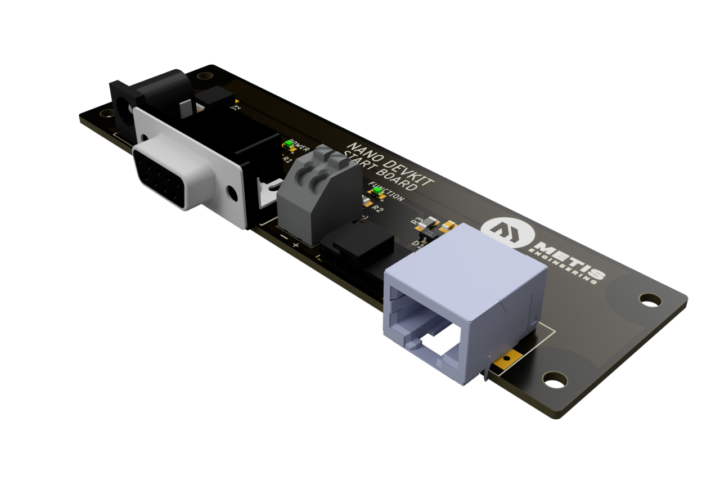
Temperature measurement is critical across countless industrial applications, from manufacturing processes to research environments. Whether you’re monitoring furnace temperatures, testing battery systems, or conducting precision laboratory work, thermocouples remain the industry’s most reliable temperature sensing technology. For applications requiring multiple temperature measurement points, Metis Engineering’s 8-Channel Isolated Thermocouple to CAN device provides a robust solution, measuring temperatures from -200°C to +1800°C across eight isolated channels with accuracies of ±0.5°C. Understanding the fundamental science behind thermocouple operation helps explain why these sensors have become indispensable in modern temperature monitoring systems.
The Seebeck Effect: The Science Behind Thermocouples
Thermocouples operate on a thermoelectric phenomenon discovered by Thomas Johann Seebeck in 1821, appropriately named the Seebeck effect. This effect describes how a temperature difference between two points in an electrical conductor or semiconductor generates a voltage difference. When one end of a metal wire is heated whilst the other remains cool, the temperature gradient causes electrons in the hot region to become more energetically agitated, producing a measurable voltage along the wire’s length.
The Seebeck effect is characterised by the Seebeck coefficient (S), which represents the ratio of voltage change to temperature change. This coefficient is expressed mathematically as:
S = ΔV / ΔT
Where ΔV represents the voltage difference and ΔT represents the temperature difference. Different materials exhibit different Seebeck coefficients, typically measured in microvolts per degree Celsius (µV/°C). This material-specific property is the key to thermocouple operation.
Why Thermocouples Use Two Different Metals
A common misconception about thermocouples is that the voltage originates at the junction where two dissimilar metals meet. In reality, the Seebeck voltage develops along the length of each wire experiencing a temperature gradient. The junction simply provides an electrical connection between the two different metals, positioned at the point where temperature measurement is required.
The reason thermocouples require two different materials becomes clear when considering measurement practicalities. If a thermocouple were constructed from two identical materials, each wire would generate the same Seebeck voltage when exposed to the same temperature gradient. These voltages would cancel each other out, resulting in zero net voltage regardless of temperature. By using two dissimilar metals with different Seebeck coefficients, the voltages generated by each wire differ, creating a measurable potential difference proportional to the temperature at the junction.
How a Thermocouple Measures Temperature
A practical thermocouple circuit consists of two dissimilar metal wires joined at one end (the measurement junction or “hot junction”) with the other ends connected to a measuring device (the reference junction or “cold junction”). When the measurement junction experiences a temperature different from the reference junction, the Seebeck effect generates a voltage across the circuit.
Critically, a thermocouple measures the temperature difference between the measurement and reference junctions, not the absolute temperature at either point. The open-circuit voltage at the reference junction is proportional to this temperature difference. To determine the absolute temperature at the measurement junction, the temperature of the reference junction must be known.
Traditional thermocouple systems maintained the reference junction at a precisely known temperature, typically 0°C using an ice bath. Modern measurement systems employ electronic cold junction compensation, where a separate temperature sensor measures the reference junction temperature and the system automatically compensates for it in calculations.
Common Thermocouple Types and Their Applications
Thermocouples are classified by letter designations (Type K, Type J, Type T, etc.) based on their metal composition. Each type offers distinct characteristics suited to specific temperature ranges and environmental conditions.
Type K (Chromel/Alumel)
Type K thermocouples are the most widely used, accounting for a significant portion of industrial temperature measurements. Constructed from Chromel (nickel-chromium alloy) and Alumel (nickel-aluminium alloy), Type K sensors offer excellent versatility with a temperature range from -200°C to +1260°C. Their Seebeck coefficient is approximately 41 µV/°C, providing good sensitivity across the operating range. Type K thermocouples demonstrate good corrosion resistance and perform well in oxidising atmospheres, making them suitable for furnaces, kilns, and general industrial applications.
Type J (Iron/Constantan)
Type J thermocouples, composed of iron and Constantan (copper-nickel alloy), represent the second most common thermocouple type. They operate effectively in the -210°C to +760°C range with a Seebeck coefficient of approximately 50 µV/°C, offering slightly higher sensitivity than Type K. Type J sensors excel in vacuum, reducing, or inert atmospheres. However, the iron wire oxidises rapidly above 540°C, limiting their use at higher temperatures. These thermocouples are commonly employed in plastics processing, food industry applications, and general industrial equipment where moisture is not present.
Type T (Copper/Constantan)
Type T thermocouples utilise copper and Constantan wires, providing exceptional stability particularly at low temperatures. Their operational range spans -200°C to +370°C, with a Seebeck coefficient around 39-41 µV/°C. Type T thermocouples demonstrate superior accuracy (±1°C or ±0.75%, whichever is greater) compared to other base metal thermocouples. They resist corrosion in moist atmospheres and excel in cryogenic applications, ultra-low freezers, laboratory environments, and refrigeration systems.
Type N (Nicrosil/Nisil)
Type N thermocouples were developed as an improved alternative to Type K, using Nicrosil (nickel-chromium-silicon) and Nisil (nickel-silicon-magnesium) alloys. They operate across the same temperature range as Type K (-200°C to +1260°C) but offer better stability at high temperatures and superior resistance to oxidation between 300°C and 500°C. Type N thermocouples prove particularly valuable in applications involving sulfur-containing atmospheres where Type K sensors would degrade rapidly.
Type E (Chromel/Constantan)
Type E thermocouples pair Chromel with Constantan, generating the highest EMF output per degree of all commonly used thermocouples. Their temperature range extends from -200°C to +870°C with excellent sensitivity. Type E sensors provide higher accuracy than Type K or Type J at moderate temperatures below 1000°C, making them well-suited for cryogenic applications and situations requiring strong signal output.
Noble Metal Thermocouples (Types R, S, B)
For extreme temperature applications, noble metal thermocouples constructed from platinum and platinum-rhodium alloys offer stability and accuracy at temperatures exceeding 1600°C. Type S (platinum/10% rhodium-platinum) and Type R (platinum/13% rhodium-platinum) operate up to approximately 1600°C, whilst Type B (platinum-6% rhodium/platinum-30% rhodium) extends the range to 1800°C. These premium thermocouples are commonly found in high-temperature furnaces, glass manufacturing, pharmaceutical applications, and laboratory research requiring exceptional accuracy.
Key Performance Characteristics
Several factors influence thermocouple selection beyond temperature range alone:
Accuracy: Type T thermocouples typically offer the tightest accuracy among base metal types at ±1°C or ±0.75%. Types J, K, and N provide standard accuracy of ±2.2°C or ±0.75%, whichever is greater. Higher-grade thermocouple wire can achieve special limits of error around ±1.1°C or 0.4%.
Sensitivity: The Seebeck coefficient determines output voltage for a given temperature change. Higher sensitivity thermocouples generate larger signals, potentially improving measurement resolution. Type E offers the highest sensitivity (approximately 61 µV/°C), followed by Type J (50 µV/°C), Type K (41 µV/°C), and Type T (39 µV/°C).
Response Time: Physical construction significantly affects response time. Grounded junction thermocouples, where the thermocouple wires are welded directly to the protective sheath, offer the fastest response as heat transfers efficiently to the sensing element. Ungrounded junctions provide electrical isolation at the expense of slightly slower response.
Wire Gauge: Thermocouple wire diameter influences both maximum operating temperature and durability. Finer gauge wires may not withstand the full temperature range of their thermocouple type. For example, Type T thermocouples are rated to 370°C with heavy gauge wire but only 150°C with fine 30 AWG wire due to accelerated oxidation in smaller conductors.
Practical Considerations for Thermocouple Measurements
Cold Junction Compensation
Since thermocouples measure temperature difference rather than absolute temperature, accounting for the reference junction temperature is essential. Modern measurement systems incorporate electronic cold junction compensation using a precision temperature sensor at the measurement device terminals. The system adds the measured reference temperature to the thermocouple-indicated temperature difference to calculate the absolute temperature at the hot junction.
Parasitic Thermocouples
Any junction between dissimilar metals creates a thermocouple. When connecting a thermocouple to measurement equipment using extension wires or terminal blocks, additional unwanted thermocouples form at each connection point. These “parasitic thermocouples” introduce measurement errors unless all connection points are maintained at the same temperature or proper thermocouple extension wire (matching the thermocouple type) is used throughout the circuit.
Environmental Factors
Thermocouple longevity and accuracy depend heavily on environmental conditions. Oxidising, reducing, or inert atmospheres affect different thermocouple types differently. For instance, Type K thermocouples can develop “green rot” (preferential chromium oxidation) in certain low-oxygen environments between 816°C and 1038°C, causing significant calibration drift. Proper protective sheaths matched to the application environment are essential for reliable long-term operation.
Inhomogeneity Effects
High-temperature exposure can alter the metallurgical properties of thermocouple wires through oxidation, contamination, or grain structure changes. These effects create inhomogeneities along the wire where Seebeck coefficients differ from specification. To minimise errors from aged thermocouple sections, position any temperature-damaged wire portions in isothermal zones where they won’t experience temperature gradients.
Multi-Channel Measurement Systems
Many applications require monitoring multiple temperature points simultaneously. Battery testing systems, for instance, need temperature data from numerous cells. Furnace profiling demands readings from multiple locations. Industrial process control often involves tracking temperatures across various stages of production.
Multi-channel thermocouple systems address these requirements by integrating multiple thermocouple inputs with signal conditioning, analog-to-digital conversion, and digital communication interfaces. Channel isolation prevents ground loops and electrical interference between measurement points. Modern systems employ standard industrial communication protocols like CAN bus to integrate seamlessly with control systems and data acquisition platforms.
The Metis Engineering 8-Channel Isolated Thermocouple to CAN device exemplifies modern multi-channel measurement capabilities. Each of its eight channels features 1000VDC isolation, preventing electrical interference between channels whilst enabling measurements in electrically noisy environments. Open-circuit and short-circuit detection features identify broken or disconnected thermocouple wires automatically. The device supports all common thermocouple types (K, J, T, N, S, E, B, and R) with miniature thermocouple connectors as standard, providing flexibility across diverse applications. Sampling rates up to 40Hz per channel enable high-speed temperature monitoring, whilst configurable CAN bus communication facilitates integration into existing measurement and control infrastructure.
Advantages of Thermocouple Technology
Thermocouples have maintained their position as preferred temperature sensors across numerous industries due to several inherent advantages:
Wide Temperature Range: No other practical temperature sensor matches the thermocouple’s operational span. From cryogenic applications below -200°C to extreme high-temperature environments exceeding 1800°C, thermocouples provide reliable measurements where other sensors fail.
Ruggedness and Durability: Thermocouples are inherently robust, constructed from solid metal wires without fragile components. They withstand vibration, shock, and harsh environmental conditions better than most alternative temperature sensors.
Self-Powered Operation: The Seebeck effect generates voltage without requiring external power. Whilst measurement circuits need power, the sensing element itself is entirely passive, enhancing reliability in remote or power-limited applications.
Fast Response: Particularly when using grounded junction configurations and small wire gauges, thermocouples respond quickly to temperature changes. This characteristic proves essential in dynamic processes requiring real-time control.
Cost-Effectiveness: Compared to precision resistance temperature detectors (RTDs) or infrared sensors, thermocouples offer economical temperature measurement. A basic thermocouple probe costs significantly less than comparable accuracy alternative sensors.
Versatility: The variety of thermocouple types, junction styles, sheath materials, and form factors enables optimisation for virtually any temperature measurement application.
Thermocouples Versus Alternative Temperature Sensors
Whilst thermocouples dominate many applications, understanding their characteristics relative to alternatives helps inform sensor selection:
RTDs (Resistance Temperature Detectors) offer superior accuracy, linearity, and long-term stability compared to thermocouples, particularly at moderate temperatures. However, RTDs are limited to approximately 600°C for standard types (1100°C for extended range), cost 2-3 times more than equivalent thermocouples, and require excitation current.
Thermistors provide excellent sensitivity and accuracy over limited temperature ranges (typically -50°C to +150°C) but lack the thermocouple’s wide operating range and high-temperature capability.
Infrared Sensors enable non-contact temperature measurement but require clear line-of-sight, cost significantly more than contact sensors, and can be affected by emissivity variations and environmental conditions.
For applications within RTD temperature limits where accuracy is paramount, RTDs represent the better choice. For high-temperature applications, rapid response requirements, or cost-sensitive installations, thermocouples provide optimal solutions.
Conclusion
Thermocouples convert temperature into electrical signals through the elegant simplicity of the Seebeck effect, offering reliable measurement across temperature ranges unmatched by alternative technologies. Understanding the fundamental operating principles, material properties influencing performance, and practical considerations affecting accuracy enables informed selection and proper application of these versatile sensors.
From laboratory research to heavy industrial processes, thermocouples continue evolving alongside measurement technology. Modern multi-channel systems with digital interfaces extend traditional thermocouple capabilities whilst maintaining the core advantages of ruggedness, wide temperature range, and cost-effectiveness that have established thermocouples as the industry standard for temperature measurement.
Whether specifying sensors for a single critical measurement point or implementing comprehensive temperature monitoring across complex systems, thermocouples provide the proven performance modern applications demand.