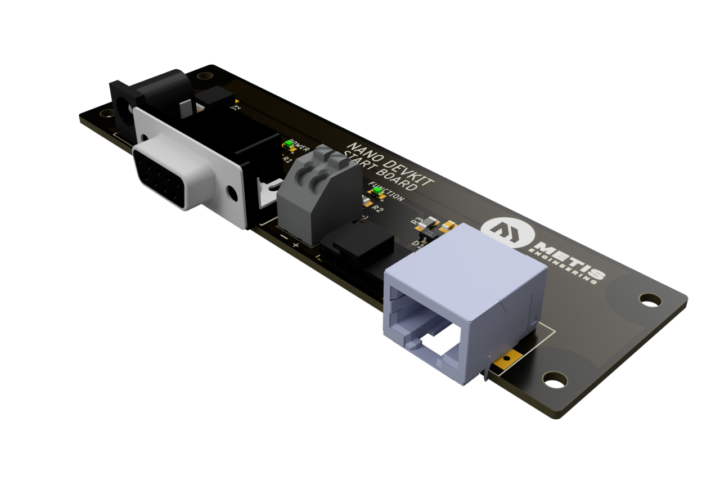
Temperature measurement forms the foundation of countless industrial processes, from manufacturing and aerospace to automotive testing and energy systems. Amongst the various temperature sensing technologies available, thermocouples remain the most widely deployed solution, valued for their durability, versatility, and ability to measure extreme temperatures that would destroy alternative sensors. Modern applications increasingly demand multi-channel temperature monitoring systems, with solutions such as Metis Engineering’s 8 Channel Isolated Thermocouple to CAN system providing comprehensive thermal mapping capabilities essential for battery testing, aerospace development, and advanced manufacturing processes. Understanding how thermocouples work and selecting the appropriate technology for specific applications determines the difference between reliable process control and costly measurement failures.
What is a Thermocouple?
A thermocouple is a temperature measurement device consisting of two dissimilar metal wires joined at one end to form a junction. When this junction experiences a temperature difference compared to the opposite end of the wires, it generates a small voltage proportional to that temperature difference. This voltage can be measured and converted into an accurate temperature reading, making thermocouples essential sensors across industrial, scientific, and commercial applications.
The elegance of thermocouple technology lies in its simplicity. Unlike resistance-based sensors that require excitation current or infrared sensors demanding line-of-sight access, thermocouples generate their own voltage signal directly from temperature differences. This self-powered characteristic, combined with their robust construction, enables thermocouples to function reliably in harsh environments where other measurement technologies fail.
How Do Thermocouples Work? The Seebeck Effect Explained
The operating principle behind thermocouples derives from the Seebeck effect, discovered by Thomas Seebeck in 1821. When two dissimilar metals are joined and their junctions maintained at different temperatures, a continuous current flows in the thermoelectric circuit. This phenomenon occurs because temperature differences create varying electron energy levels in different materials, generating electromotive force.
The junction exposed to the measured temperature is termed the “hot junction” or “measuring junction,” whilst the reference junction (historically maintained in an ice bath, now typically compensated electronically) provides the baseline for voltage comparison. The voltage generated is small—typically measured in millivolts—but predictable and repeatable for a given temperature difference and metal combination.
Modern thermocouple instrumentation incorporates cold junction compensation, electronically measuring the temperature at the instrument connection point and mathematically adjusting the reading to account for this reference temperature. This eliminates the need for maintaining physical reference junctions at known temperatures, substantially simplifying practical implementation whilst maintaining measurement accuracy.
Types of Thermocouples: Selecting the Right Metal Combination
Whilst theoretically any two dissimilar metals can form a thermocouple, practical considerations around linearity, accuracy, repeatability, and temperature range have led to standardisation around specific metal combinations. Each standardised thermocouple type offers distinct characteristics suited to particular applications.
Type K Thermocouples (Chromel-Alumel)
Type K thermocouples, composed of nickel-chromium and nickel-aluminium alloys, represent the most widely used thermocouple type globally. Their popularity stems from cost-effectiveness, broad temperature range (-200°C to +1372°C), reasonable accuracy, and good oxidation resistance. Type K thermocouples find extensive application in general-purpose industrial temperature measurement, from HVAC systems to manufacturing processes.
The colour coding for Type K thermocouples features green insulation, with the positive conductor (chromel) marked green and the negative conductor (alumel) typically white or marked differently depending on regional standards. This visual identification prevents connection errors that would compromise measurement accuracy.
Type J Thermocouples (Iron-Constantan)
Type J thermocouples utilise iron and copper-nickel (constantan) conductors, offering a more limited temperature range (0°C to +750°C) compared to Type K but demonstrating particular strength in reducing atmosphere applications. The plastics industry frequently specifies Type J thermocouples for process monitoring, where their characteristics align well with typical processing temperatures.
Black colour coding identifies Type J thermocouples, with the iron conductor forming the positive leg. These thermocouples offer cost advantages similar to Type K whilst providing enhanced performance in specific industrial environments, particularly where oxidation resistance is less critical than in Type K applications.
Type T Thermocouples (Copper-Constantan)
Type T thermocouples pair copper with copper-nickel alloy, providing excellent accuracy and stability in the -200°C to +400°C range. Their particular strength lies in low-temperature applications and environments where oxidation or corrosion pose significant challenges. Cryogenic applications, food processing, and pharmaceutical manufacturing commonly employ Type T thermocouples.
The positive copper conductor provides inherent corrosion resistance whilst the constantan negative leg offers stability. Type T thermocouples demonstrate superior performance in moisture-rich environments compared to iron-based alternatives, making them preferred choices for outdoor applications and humid industrial settings.
Type N, E, S, B, and R Thermocouples
Beyond the common Type K, J, and T thermocouples, specialised applications require alternative metal combinations:
**Type N thermocouples** (nicrosil-nisil) offer improved high-temperature stability and oxidation resistance compared to Type K, making them increasingly popular in precision industrial applications requiring long-term accuracy at elevated temperatures (-270°C to +1300°C).
**Type E thermocouples** (chromel-constantan) generate the highest voltage output per degree temperature change amongst common thermocouple types, providing enhanced sensitivity particularly valuable in low-temperature measurement applications (-270°C to +1000°C).
**Type S, R, and B thermocouples** employ platinum-based alloys, delivering exceptional accuracy and stability at extremely high temperatures but at substantially higher cost. These noble metal thermocouples find primary application in laboratory standards, aerospace testing, and specialised high-temperature industrial processes requiring precise measurement above 1000°C.
Applications: Where Thermocouples Excel
The versatility of thermocouple technology enables temperature measurement across an extraordinary range of applications. Industrial furnaces operating at temperatures exceeding 1500°C rely on thermocouples for process control, as do cryogenic systems monitoring temperatures approaching absolute zero. This exceptional temperature range—spanning over 2000°C—remains unmatched by alternative temperature sensing technologies.
Manufacturing processes across virtually every industry employ thermocouples. Automotive testing facilities utilise hundreds of thermocouples simultaneously to map thermal performance during engine dynamometer testing. Aerospace applications demand thermocouples capable of withstanding extreme vibration, thermal cycling, and temperature gradients. Petrochemical facilities deploy thermocouples in hazardous atmospheres where intrinsic safety requirements preclude many alternative sensing technologies.
The energy sector represents another major thermocouple application domain. Power generation facilities monitor turbine temperatures, boiler performance, and emission systems using extensive thermocouple networks. Battery testing and development, particularly for electric vehicle and grid storage applications, requires precise thermal monitoring to ensure safety and optimise performance—applications where multi-channel thermocouple systems prove particularly valuable.
Food processing operations employ thermocouples throughout production chains, from raw material storage through cooking, cooling, and packaging processes. Pharmaceutical manufacturing demands temperature monitoring meeting stringent regulatory requirements, where thermocouples provide the necessary accuracy, traceability, and validation capabilities.
Multi-Channel Temperature Monitoring: Meeting Complex Measurement Demands
Many modern applications require simultaneous measurement across multiple temperature points. Battery testing, for instance, demands thermal mapping across cell surfaces to identify hotspots indicating potential safety issues. Aerospace component testing requires temperature profiles across surfaces experiencing non-uniform heating during operation. Manufacturing process optimisation depends on understanding spatial temperature variations that single-point measurements cannot reveal.
Traditional approaches to multi-point temperature measurement involved connecting multiple individual thermocouple indicators or transmitters—an approach that becomes impractical as channel counts increase beyond a handful of measurement points. Modern applications frequently require 8, 16, or even hundreds of simultaneous temperature channels, necessitating integrated multi-channel solutions.
Advanced multi-channel thermocouple systems address these requirements by providing multiple isolated measurement channels within a single package. The Metis Engineering 8 Channel Isolated Thermocouple to CAN exemplifies this approach, offering eight independent temperature measurement channels with 1000VDC isolation between channels. This isolation proves crucial in applications where different measurement points may experience significantly different electrical potentials, preventing ground loops and measurement errors that would compromise data quality in non-isolated systems.
The device supports all common thermocouple types (K, J, T, N, S, E, B, and R), eliminating the need for different hardware when applications require mixed thermocouple types or when transitioning between test setups. Temperature measurement ranges span from -200°C to +1800°C depending on thermocouple type, covering virtually any industrial temperature monitoring requirement.
Measurement accuracy of ±0.5°C (typical) from 0°C to 85°C, tightening to ±1°C (typical) across the extended -40°C to +125°C range, provides the precision necessary for demanding applications. Each channel samples at rates up to 40Hz, capturing rapid thermal transients that slower measurement systems might miss—particularly important in dynamic testing scenarios such as thermal cycling or pulse heating applications.
CAN bus connectivity simplifies integration into automotive, aerospace, and industrial control systems already employing CAN-based architectures. The included DBC (Database CAN) file enables straightforward configuration within development environments, whilst configurable bus speeds and addressing allow flexible network topologies. IP67-rated connectors support daisy-chaining up to 128 additional modules, enabling scalable temperature monitoring networks as measurement requirements expand.
Built-in open-circuit and short-circuit detection provides immediate indication of thermocouple failures, disconnections, or grounding faults—critical diagnostic capabilities that prevent basing decisions on erroneous data. DIN rail mounting facilitates installation in control cabinets and test racks, whilst the 9-32V input supply voltage range accommodates standard industrial and automotive power systems.
Advantages and Considerations When Specifying Thermocouples
Thermocouples offer compelling advantages that explain their continued dominance in industrial temperature measurement. Their extraordinarily wide temperature range surpasses alternative technologies—platinum resistance thermometers (RTDs) typically limit operation to approximately -200°C to +850°C, whilst thermistors rarely exceed -50°C to +150°C. Thermocouples routinely measure temperatures where alternative sensors would be destroyed.
Durability represents another significant advantage. The simple junction construction withstands shock, vibration, and mechanical stress that would damage more delicate sensors. Thermocouples function reliably in corrosive atmospheres, vacuum environments, and high-pressure applications. Their small junction sizes enable fast thermal response—crucial for monitoring rapid temperature changes or measuring small components where thermal mass must be minimised.
Cost-effectiveness, particularly for common types like K and J thermocouples, makes deployment economically viable even in applications requiring numerous measurement points. The absence of self-heating effects—a concern with resistance-based sensors requiring excitation current—eliminates potential measurement errors in low thermal mass applications.
However, thermocouples present considerations requiring attention during system design. Measurement accuracy, whilst adequate for most industrial applications, falls below that achievable with calibrated platinum RTDs. Type K thermocouples typically demonstrate accuracy of ±1.5°C or ±0.4% of reading, compared to ±0.15°C achievable with precision RTDs. Applications demanding highest accuracy may justify the additional cost and complexity of alternative sensing technologies.
Thermocouples require appropriate instrumentation capable of measuring millivolt-level signals with sufficient resolution whilst implementing cold junction compensation. Modern integrated solutions like multi-channel CAN-connected systems incorporate these requirements within a single package, but legacy installations may require careful attention to wiring practices, grounding, and electromagnetic interference mitigation.
Long-term stability varies significantly amongst thermocouple types and operating conditions. Extended exposure to extreme temperatures, oxidising or reducing atmospheres, and thermal cycling can alter junction characteristics, affecting calibration accuracy. Critical applications benefit from periodic calibration verification, particularly for thermocouples operating near their maximum temperature ratings.
Installing and Using Thermocouples: Best Practices
Proper thermocouple installation significantly impacts measurement quality. The junction should contact the measured surface or be immersed in the measured medium with sufficient depth to ensure the measurement point has reached equilibrium with the target temperature. Inadequate immersion depth leads to stem conduction errors, where heat conducts along the thermocouple sheath, causing the junction temperature to differ from the intended measurement point.
Extension wire selection requires attention to thermocouple type compatibility. Using incorrect extension wire introduces additional junctions with different thermal characteristics, generating measurement errors. Standardised colour coding assists correct wire identification, but verification remains prudent particularly when dealing with older installations or mixed thermocouple types.
Avoid running thermocouple wires alongside power cables or in close proximity to electromagnetic interference sources. The low-level millivolt signals thermocouples generate are susceptible to noise pickup, particularly in industrial environments with motor drives, welders, or radio frequency equipment. Twisted-pair or shielded thermocouple extension wire provides enhanced noise rejection in electrically noisy environments.
Connection integrity demands attention throughout the measurement chain. Corroded connectors, loose terminals, or damaged insulation introduce resistance that appears as temperature error. Regular inspection and maintenance, particularly in harsh environments, ensures continued measurement reliability.
Thermocouples Versus Alternative Temperature Sensors
Understanding when thermocouples represent the optimal choice versus alternative sensing technologies enables informed specification decisions. Resistance temperature detectors (RTDs), particularly platinum-based Pt100 and Pt1000 sensors, offer superior accuracy and long-term stability compared to thermocouples. Applications requiring measurement uncertainty below ±0.5°C, such as pharmaceutical manufacturing or precision materials testing, often justify RTD deployment despite higher sensor costs and more complex instrumentation requirements.
However, RTDs cannot match thermocouple temperature ranges. The platinum element in RTDs limits practical operation to approximately 850°C in industrial applications, whilst thermocouples routinely measure temperatures exceeding 1500°C. RTDs also demonstrate slower thermal response due to their packaged construction, making thermocouples preferable for measuring rapidly changing temperatures.
Infrared pyrometers provide non-contact temperature measurement advantageous when sensors cannot physically contact measured surfaces or when measuring moving objects. However, infrared measurement requires clear line-of-sight, is affected by surface emissivity variations, and typically costs more than contact sensors. Thermocouples remain preferable for stationary applications where physical contact poses no concerns.
Thermistors offer high sensitivity and relatively low cost but operate over limited temperature ranges (typically -50°C to +150°C) with highly nonlinear response characteristics. Their primary application lies in consumer electronics and HVAC systems where the temperature range suits the measurement requirement and cost sensitivity drives design decisions.
Emerging Applications and Future Developments
Battery technology development represents a rapidly growing thermocouple application domain. Electric vehicle battery packs employ extensive thermocouple networks to monitor cell temperatures during testing and increasingly during operational service. Grid-scale energy storage systems similarly require thermal monitoring to ensure safe operation and optimise cycle life. The transition towards higher-capacity cells and faster charging rates intensifies thermal monitoring demands, driving requirements for multi-channel measurement systems offering high accuracy and rapid sampling.
Additive manufacturing processes, particularly metal 3D printing, depend on precise thermal control during build processes. Thermocouples monitor build chamber temperatures, substrate heating, and post-processing heat treatment cycles. The complex thermal profiles inherent to layer-by-layer construction require measurement systems capturing spatial temperature variations that single-point monitoring cannot provide.
Emerging solid-state battery technologies introduce new thermal monitoring challenges. The different thermal characteristics of solid electrolytes compared to conventional liquid electrolytes require measurement systems capable of accurately characterising thermal behaviour during development testing. Multi-channel systems supporting various thermocouple types accommodate the experimental nature of this research whilst providing the flexibility to adapt as technologies mature.
Thermocouple technology itself continues evolving. Thin-film thermocouples deposited directly onto component surfaces enable measurement in applications where conventional probe-type thermocouples prove impractical. Wireless thermocouple systems eliminate cabling challenges in rotating machinery or test setups where physical connections prove problematic. Advances in measurement electronics continue improving accuracy whilst reducing size and cost.
Conclusion: Thermocouples Remain Indispensable Temperature Sensors
Despite the proliferation of alternative temperature sensing technologies, thermocouples maintain their position as the most versatile and widely deployed temperature measurement solution. Their exceptional temperature range, robust construction, fast response, and cost-effectiveness ensure continued relevance across industrial, scientific, and commercial applications.
Understanding thermocouple operating principles, recognising the characteristics distinguishing different thermocouple types, and appreciating installation best practices enables engineers and technicians to deploy these sensors effectively. Modern multi-channel measurement systems extend thermocouple capabilities into applications requiring comprehensive thermal mapping, whilst maintaining the fundamental advantages that have made thermocouples indispensable since Seebeck’s discovery over two centuries ago.
Whether measuring furnace temperatures exceeding 1500°C, mapping thermal profiles across battery packs, monitoring aerospace component testing, or controlling industrial manufacturing processes, thermocouples deliver the reliable temperature measurement essential to modern technology. Selecting appropriate thermocouple types, employing suitable instrumentation, and following proper installation practices ensures these simple yet sophisticated sensors continue providing the accurate thermal data that underpins process control, product development, and operational safety across industries.