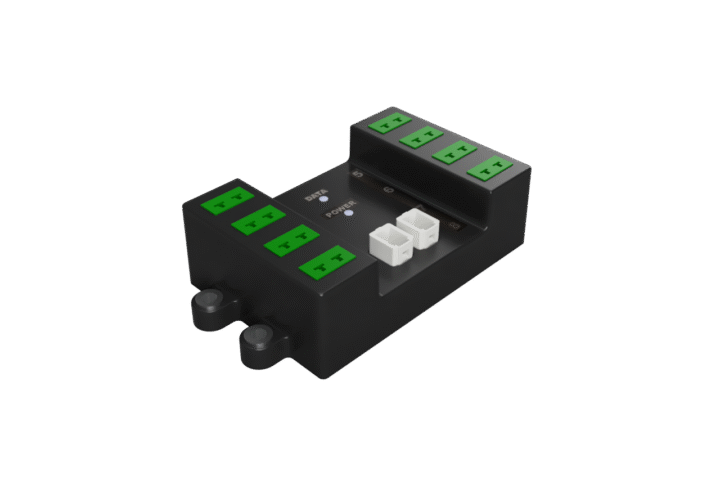
The circular economy principles driving sustainable development demand maximum utilisation of resources throughout their useful life. Electric vehicle batteries present a compelling opportunity for extended service, as cells that no longer meet the demanding performance requirements of automotive applications often retain 70-80% of their original capacity. This residual capability makes retired EV batteries ideal candidates for stationary energy storage where weight and space constraints are less critical than in vehicle applications. However, repurposing batteries with unknown degradation histories introduces significant safety and reliability challenges that sophisticated monitoring technology must address.
The Second-Life Battery Value Proposition
Manufacturing lithium-ion battery packs represents a substantial investment in materials, energy and environmental impact. The embedded carbon footprint of a typical EV battery pack ranges from several hundred to over 1,000 kilograms of CO2 equivalent depending on cell chemistry, manufacturing location and energy sources. Extracting maximum value from this initial investment through second-life applications delivers compelling economic and environmental benefits.
Stationary energy storage applications including renewable energy integration, grid stabilisation and commercial building demand management operate under far less demanding conditions than automotive service. The absence of weight constraints, thermal cycling from aggressive charge and discharge rates, and mechanical vibration from vehicle operation means that batteries unsuitable for continued EV service can provide years of reliable performance in fixed installations.
Economic analysis demonstrates substantial cost advantages for second-life battery systems compared to new cell deployment. Systems utilising repurposed EV packs can achieve cost reductions of 40-60% whilst simultaneously reducing embedded emissions by similar margins. These savings make energy storage economically viable for applications where new battery costs present barriers to deployment.
Understanding Second-Life Battery Uncertainties
Despite the compelling advantages, second-life batteries introduce uncertainties absent from new cell deployments. The detailed history of each cell including charge-discharge cycles, thermal exposure, depth of discharge patterns and any abusive events remains largely unknown. EV battery management systems log operational data, but these records may be incomplete, lost during vehicle-to-storage conversion or lack the granularity required for detailed health assessment.
Cell-to-cell variation within battery packs increases during automotive service as individual cells experience different thermal conditions, current loads and mechanical stress. This divergence means that whilst average pack capacity may remain within acceptable limits, individual cells can exhibit significantly different degradation levels. Identifying and managing these variations becomes critical in second-life applications where pack safety depends on understanding outlier cell behaviour.
Previous exposure to thermal events, mechanical damage or electrical faults creates latent failure modes that may not manifest until subsequent service. A cell that experienced partial thermal runaway arrested by cooling systems may appear functional but possess compromised internal structure predisposing it to future failure. Traditional electrical testing cannot always identify these hidden degradation mechanisms.
Comprehensive Environmental Monitoring for Second-Life Safety
The uncertainties inherent in second-life battery deployment demand continuous monitoring beyond the state of charge and voltage measurements typical of new battery systems. Environmental parameters including pressure, temperature, humidity and volatile organic compounds provide early warning of developing issues before they progress to safety-critical failures.
The Cell Guard sensor from Metis Engineering addresses these requirements through comprehensive environmental monitoring specifically designed for battery pack applications. By measuring multiple parameters simultaneously, the sensor enables sophisticated diagnostic algorithms distinguishing normal operation from developing problems requiring intervention.
Volatile organic compound detection provides the earliest possible warning of cell degradation or failure. As cells begin venting electrolyte vapours, VOC sensors identify these signatures before temperature rises or pressure changes become apparent. This early detection is particularly valuable in second-life applications where individual cell failure risk is elevated compared to new battery systems.
Allye Energy: Second-Life Storage in Practice
Allye Energy, a pioneering energy storage company, demonstrates the practical application of advanced monitoring technology in second-life battery systems. The company repurposes retired EV batteries into 320kWh Battery Energy Storage Systems, achieving significant cost reductions and 60% decreases in embedded CO2 emissions compared to new cell deployment.
Addressing the inherent uncertainties of second-life batteries, Allye conducts extensive testing to assess pack health and performance before deployment. However, testing provides only a snapshot of battery condition at a single point in time. Continuous monitoring throughout operational service provides the ongoing assurance essential for safe, reliable second-life system operation.
Integration of Cell Guard sensors with accelerometer capability provides Allye with comprehensive environmental monitoring including VOCs, absolute pressure, relative humidity and mechanical shock detection. This multi-parameter approach enables early identification of developing issues, supporting preventive maintenance and ensuring safe operation throughout the extended service life enabled by stationary storage applications.
Moisture Detection and Ingress Prevention
Second-life battery systems often operate in less controlled environments than new EV batteries. Outdoor installations, repurposed shipping containers and cost-optimised enclosures may not provide the environmental sealing typical of automotive battery packs. Moisture ingress represents a significant risk, potentially causing internal short circuits, corrosion of current-carrying components and accelerated degradation.
Relative humidity and dewpoint monitoring enables early detection of moisture ingress before condensation occurs within the battery pack. By tracking dewpoint temperature relative to cell temperature, battery management systems can identify conditions where moisture will condense on internal surfaces. This awareness enables preventive measures including increased ventilation, dehumidification or thermal management adjustments preventing moisture-related failures.
The combination of humidity monitoring with pressure tracking provides additional diagnostic capability. Unexpected pressure changes accompanied by humidity increases may indicate seal failures allowing atmospheric moisture into the battery enclosure. Early identification enables repair before significant moisture accumulation creates safety or performance issues.
Pressure Monitoring for Seal Integrity and Cell Venting
Sealed battery enclosures maintain slight positive pressure during operation due to outgassing and thermal expansion. Monitoring absolute pressure provides valuable insights into enclosure integrity and cell behaviour. Gradual pressure decline may indicate seal degradation allowing atmospheric exchange, whilst rapid pressure increases suggest cell venting or other gas generation within the pack.
Second-life batteries with unknown service histories may have experienced seal damage during vehicle operation or disassembly. Continuous pressure monitoring verifies enclosure integrity throughout operational service, providing confidence that atmospheric contaminants remain excluded whilst any internal gas generation is immediately apparent.
Pressure signatures also provide diagnostic information about cell behaviour. Healthy cells exhibit minimal gas generation, whilst degraded cells may show increased outgassing as electrolyte decomposition accelerates. Tracking these trends enables predictive maintenance, identifying cells requiring attention before failure occurs.
Accelerometer Integration for Transportation and Installation Monitoring
Second-life battery systems often undergo multiple transportation and installation cycles as they move from vehicle dismantling facilities through testing and integration to final deployment locations. These handling operations create opportunities for mechanical damage from drops, impacts or excessive vibration during transport.
Accelerometer-equipped Cell Guard sensors provide continuous mechanical shock and vibration monitoring throughout these operations. By logging impact events, system integrators can identify potential damage requiring inspection before the battery enters service. This capability prevents the deployment of mechanically compromised batteries that could fail prematurely or present safety risks.
During operational service, accelerometer data provides additional safety monitoring. Unexpected vibration or mechanical shock may indicate mounting failure, earthquake activity or external impacts requiring inspection. This awareness supports proactive maintenance and provides forensic data should failures occur.
CAN Bus Integration with Energy Management Systems
Modern energy storage installations employ sophisticated energy management systems controlling charge and discharge operations, monitoring system health and optimising performance. Integration of environmental sensors into these systems requires compatible communication protocols that enable seamless data exchange without complex interfacing.
The Cell Guard sensor’s CAN communication capability provides this integration, transmitting all measured parameters using standard protocols that energy management systems can incorporate directly. This approach eliminates the need for specialised data acquisition hardware or protocol conversion equipment, reducing system complexity and cost.
CAN communication also supports distributed sensor architectures where multiple Cell Guard units monitor different sections of large battery installations. This multi-point monitoring provides granular insight into pack behaviour, enabling identification of localised issues that might be masked in system-level measurements.
Predictive Maintenance and Life Extension
The economic viability of second-life battery systems depends on achieving sufficient operational life to justify repurposing costs. Premature failures or conservative operating limits erode economic advantages whilst potentially creating safety incidents that damage confidence in second-life technology.
Continuous environmental monitoring enables predictive maintenance approaches that maximise operational life whilst maintaining safety margins. By identifying developing issues in their earliest stages, operators can perform targeted maintenance, adjust operating parameters or replace individual modules before failures occur. This proactive approach extends system life, improves economics and maintains the safety record essential for continued second-life deployment.
Data from environmental sensors also informs operating strategy. Batteries exhibiting increased VOC levels or pressure trends may be candidates for reduced charge-discharge rates or narrower voltage windows, extending their useful service life whilst maintaining safe operation. This flexibility enables operators to optimise the trade-off between performance and longevity based on application requirements and economic considerations.
Battery Passport Compliance and Circular Economy Documentation
Emerging EU regulations mandate comprehensive battery passports documenting composition, performance history and environmental parameters throughout the battery lifecycle. Second-life applications must maintain this documentation trail, providing transparency about battery origins, automotive service history and stationary storage performance.
Environmental monitoring data from Cell Guard sensors provides essential information for battery passport compliance. Continuous logging of temperature, pressure, humidity and VOC levels creates the detailed environmental history that regulators and subsequent users require. This documentation supports circular economy objectives by enabling informed decisions about battery repurposing, maintenance requirements and end-of-life processing.
The traceability enabled by comprehensive monitoring also supports warranty claims, insurance assessments and liability management. When battery failures occur, detailed environmental data provides forensic insights into failure mechanisms and causation, supporting appropriate allocation of responsibility between original manufacturers, repurposing companies and end users.
Scaling Second-Life Deployment with Confidence
The success of early second-life installations like those deployed by Allye Energy demonstrates technical and economic viability. However, scaling from demonstration projects to widespread commercial deployment requires confidence in safety, reliability and performance. Sophisticated monitoring technology provides the assurance that industry stakeholders need to commit to large-scale second-life battery programmes.
Investment in advanced sensing technology represents a small fraction of total system cost whilst delivering disproportionate value through safety assurance, life extension and maintenance optimisation. As second-life battery deployment accelerates, comprehensive environmental monitoring will transition from optional enhancement to essential infrastructure enabling safe, economical operation.
Enabling the Circular Battery Economy
Second-life EV batteries represent a critical component of sustainable energy systems, extracting maximum value from the substantial investment in battery manufacturing whilst reducing the embedded emissions of stationary storage. Realising this potential requires addressing the unique challenges introduced by repurposing batteries with unknown histories and variable degradation.
Comprehensive environmental monitoring through Cell Guard sensor technology provides the continuous safety oversight, predictive maintenance capability and documentation support that second-life applications demand. From pioneering installations through mainstream commercial deployment, advanced sensing enables the circular battery economy.
For detailed specifications, technical documentation or to discuss second-life battery monitoring requirements, contact Metis Engineering directly. Investment in comprehensive monitoring technology protects second-life battery investments whilst enabling the circular economy transition.