As the global automotive industry accelerates its transition towards electrification, the hybrid and electric vehicle market stands at a pivotal juncture. With projections indicating substantial growth over the coming decade, the industry faces a crucial challenge: ensuring that battery safety infrastructure keeps pace with rapidly expanding production volumes. For manufacturers, fleet operators, and energy storage system providers, the integration of advanced battery monitoring technology has evolved from optional enhancement to essential requirement.
The Scale of Market Expansion
The hybrid vehicle market presents compelling growth indicators that underscore the magnitude of this industrial transformation. Valued at USD 271.80 billion in 2023, the global hybrid vehicle market is projected to reach USD 504.18 billion by 2032, representing a compound annual growth rate of 7.1% throughout the forecast period. This substantial expansion reflects not merely incremental change but a fundamental restructuring of global transportation infrastructure.
Asia Pacific has emerged as the dominant force in this market, commanding 51.2% of global market share in 2023. This regional leadership stems from coordinated government initiatives, substantial infrastructure investment, and aggressive emission reduction targets. China exemplifies this trend, with the country selling over 1.3 million electric vehicles in 2020, accounting for more than 40% of the global electric car market.
The momentum extends beyond Asia Pacific, with North America and Europe implementing stringent emission standards and offering substantial purchase incentives. The Indian government, for instance, provides tax rebates of up to USD 3,423 on hybrid and electric vehicle purchases, whilst Brazil offers tax incentives through its Rota 2030 programme. These policy frameworks create favourable conditions for sustained market expansion whilst simultaneously raising expectations for vehicle safety and reliability.
The Technical Evolution Driving Adoption
Consumer adoption of hybrid and electric vehicles rests upon several technical advantages that increasingly outweigh traditional internal combustion engine offerings. Hybrid systems can reduce fuel consumption by up to 35%, corresponding to an increase in fuel economy exceeding 50%. These efficiency gains translate directly into operational cost savings, particularly compelling for commercial fleet operators managing substantial fuel expenditure.
Advanced powertrain technologies enable this performance improvement. Regenerative braking systems capture kinetic energy typically lost as heat, converting it into stored electrical energy for subsequent use. Automatic start-stop systems eliminate unnecessary idling, whilst intelligent power management ensures optimal utilisation of electric motor and internal combustion engine capabilities across varying driving conditions.
The powertrain segment dominates market component analysis due to its crucial role in vehicle performance, comfort, and safety. This technical foundation comprises the internal combustion engine, battery pack, electric motor, and sophisticated control systems managing power distribution throughout the vehicle architecture. As manufacturers pursue enhanced performance and extended range capabilities, battery pack energy density and management systems have become focal points for research and development investment.
The Critical Safety Infrastructure Gap
Whilst the market expansion trajectory appears robust, the industry confronts a fundamental challenge that threatens to constrain growth: battery safety assurance at scale. Traditional Battery Management Systems (BMS), though essential components of every electric vehicle and energy storage system, possess inherent limitations in their monitoring capabilities and response times.
Conventional BMS architectures focus primarily on voltage, current, and temperature monitoring at the cell or module level. These parameters provide valuable operational data but represent lagging indicators of battery health deterioration. By the time conventional sensors detect temperature anomalies, thermal runaway events may already be progressing beyond the point of safe intervention.
This limitation carries profound implications for manufacturers, insurers, and fleet operators. A single thermal runaway incident can result in complete vehicle destruction, create significant reputational damage, trigger costly recalls, and in worst cases, cause injury or loss of life. The industry requires monitoring solutions that detect battery degradation and dangerous conditions substantially earlier in the failure progression sequence.
Advanced Detection: The Cell Guard Advantage
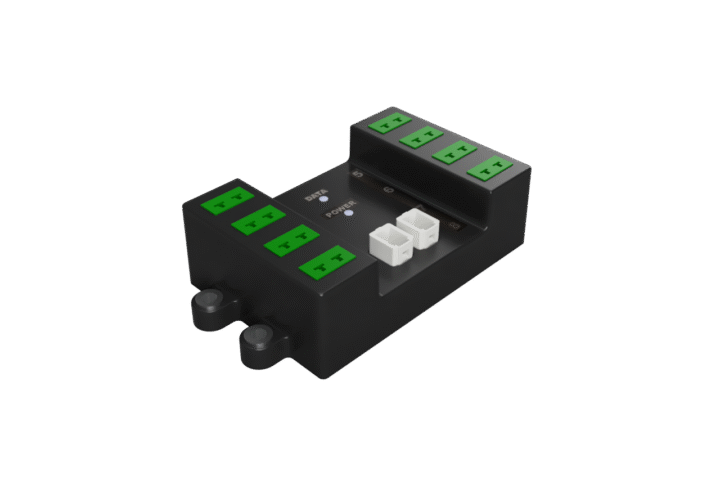
 Cell Guard represents a fundamental advancement in battery pack monitoring capability, addressing the critical gap between conventional BMS functionality and comprehensive safety requirements. Developed by Metis Engineering, this CAN-based sensor system provides multi-parameter environmental monitoring specifically designed for integration within battery enclosures.
The system monitors several critical parameters simultaneously: volatile organic compounds (VOCs), absolute pressure, air temperature, absolute air water content, relative humidity, and dew point temperature. Optional configurations add hydrogen detection and impact sensing with shock load measurement capabilities up to ±24G. This comprehensive sensor suite enables detection of battery anomalies substantially earlier than traditional temperature-based monitoring alone.
Early Warning Through VOC Detection
The most significant safety advantage Cell Guard provides stems from its VOC detection capability. During thermal runaway progression, battery cells begin venting gases well before reaching temperatures that trigger conventional thermal sensors. These gases consist primarily of volatile organic compounds released as internal cell chemistry degenerates under thermal or mechanical stress.
Third-party validation by Sandia National Laboratories in the United States confirmed Cell Guard’s ability to detect thermal runaway events more rapidly than alternative monitoring methods through VOC sensing. This early detection window creates crucial additional time for system shutdown procedures, driver notification, and emergency response coordination, potentially preventing catastrophic outcomes.
The VOC monitoring approach proves particularly valuable in large format battery packs where thermal propagation from a failing cell to adjacent cells can occur rapidly. Early detection and isolation of the affected cell or module can prevent cascade failures that would otherwise destroy the entire pack.
Comprehensive Environmental Monitoring
Beyond VOC detection, Cell Guard’s multi-parameter monitoring addresses several battery degradation mechanisms that conventional BMS architectures overlook. Moisture ingress, for instance, represents a significant but often undetected threat to battery pack integrity. Water infiltration compromises electrical insulation, creates corrosion pathways, and can lead to internal short circuits.
Cell Guard continuously monitors absolute air water content, relative humidity, and dew point temperature, providing early warning of seal failures or condensation risks before moisture-related damage occurs. This monitoring capability proves especially valuable in liquid-cooled battery pack designs where temperature differentials between coolant and ambient air can create condensation conditions within the enclosure.
Hydrogen detection, available as an optional configuration, serves dual purposes. Hydrogen production occurs later in the thermal runaway sequence, providing secondary confirmation of dangerous conditions when VOC levels may be ambiguous due to existing ambient contamination. Additionally, hydrogen may indicate water ingress and subsequent electrolysis, signalling pack integrity compromise through an entirely different failure mechanism.
Impact Assessment and Lifecycle Management
The optional accelerometer integration addresses a critical gap in battery lifecycle management: objective assessment of mechanical stress history. When electric vehicles experience collisions or impacts during transport, determining whether battery packs remain safe for continued service presents significant challenges for vehicle owners, insurers, and fleet managers.
Cell Guard’s impact sensing records both magnitude and duration of shock loads, creating a permanent record of mechanical stresses the pack has experienced. This data enables informed decisions regarding pack disposition: continued service, repurposing for second-life stationary storage applications, or safe decommissioning and recycling.
This capability reduces unnecessary battery pack replacement following minor incidents whilst providing objective justification for replacement when genuine safety concerns exist. For fleet operators managing hundreds or thousands of vehicles, this decision-making support translates directly into operational cost optimisation and improved safety assurance.
Integration and Operational Advantages
Cell Guard’s practical implementation advantages enhance its technical capabilities. The compact form factor and 5-pin automotive Molex Nano-Fit power connector facilitate integration into both new battery pack designs and retrofit installations. Configurable CAN bus speed and address settings, combined with provided CAN database files, enable straightforward incorporation into existing vehicle network architectures.
The system operates in a low-power monitoring mode when conditions remain normal, conserving energy resources whilst maintaining continuous surveillance. Upon detecting threshold exceedances, the system automatically transitions to active reporting mode, transmitting detailed parameter data across the CAN bus. A low-side drive function pin capable of 500mA output enables triggering of additional safety systems or wake signals for hibernating vehicle controllers.
ISO certification to automotive standards including ISO7637-2 2011, ISO 16750-2 2012, and ISO 16750-4 2010 ensures Cell Guard meets rigorous electromagnetic compatibility and environmental durability requirements. This certification provides assurance of reliable operation across the full spectrum of automotive operating conditions, from extreme temperature exposure to high-vibration environments.
Application Across Vehicle Segments and Energy Storage Systems
Cell Guard’s versatility extends across the complete spectrum of electrified transportation and stationary energy storage applications. In passenger vehicles, the system provides enhanced safety assurance for consumers whilst enabling manufacturers to demonstrate proactive safety measures that differentiate their offerings in competitive markets.
Commercial vehicle applications benefit substantially from Cell Guard’s comprehensive monitoring, particularly in bus and heavy goods vehicle implementations where battery pack sizes reach into hundreds of kilowatt-hours. The impact sensing capability proves especially valuable in commercial contexts where vehicles experience demanding duty cycles and frequent loading and unloading operations that create mechanical stress on battery pack mounting systems.
The technology adapts equally well to emerging transportation segments including eVTOL aircraft, electric marine vessels, and micromobility platforms such as e-bikes and e-scooters. Each application domain benefits from the enhanced safety assurance and lifecycle management capabilities Cell Guard provides, with implementation approaches tailored to specific architecture constraints and operational requirements.
Stationary energy storage systems represent another substantial application domain where Cell Guard delivers significant value. Grid-scale installations, commercial energy storage, and residential battery systems all face similar safety challenges regarding thermal runaway detection and environmental condition monitoring. The technology enables operators to maintain continuous oversight of battery health without adding substantial complexity or operational cost to system management.
Supporting the Second-Life Battery Economy
As the electric vehicle market matures, substantial volumes of battery packs approach end-of-first-life conditions based on capacity degradation that limits vehicle range but leaves cells capable of providing valuable energy storage services in less demanding applications. The second-life battery market represents both environmental and economic opportunity, extending useful life of expensive battery packs whilst reducing embedded carbon impact through extended utilisation.
However, second-life battery deployment faces inherent uncertainty regarding cell condition and remaining useful life. Comprehensive testing protocols help assess pack health, but ongoing monitoring remains essential to detect degradation and maintain safe operation throughout the second-life service period.
Allye, an energy storage company specialising in second-life battery systems, integrates Cell Guard with accelerometer functionality into its 320kWh Battery Energy Storage Systems to address these challenges. The comprehensive environmental and impact monitoring enables proactive management of safety risks whilst providing operators confidence in system reliability across diverse applications including EV charging infrastructure and grid support services.
The Path Forward: Safety as Market Enabler
As the hybrid and electric vehicle market pursues its projected growth trajectory towards USD 504.18 billion by 2032, battery safety infrastructure must evolve in parallel with production volumes. The industry cannot sustain consumer confidence and regulatory approval whilst relying solely on traditional monitoring approaches that provide limited early warning of dangerous conditions.
Advanced monitoring solutions such as Cell Guard represent essential infrastructure for the electrification transition. By providing comprehensive environmental monitoring, early thermal runaway detection through VOC sensing, and objective impact assessment for lifecycle management, these systems address critical gaps in conventional battery management system capabilities.
For manufacturers, the integration of advanced monitoring technology demonstrates commitment to safety leadership whilst potentially reducing warranty costs through early detection of developing issues before they progress to catastrophic failures. Fleet operators gain tools for optimised lifecycle management, making informed decisions about pack retention, repurposing, or replacement based on objective condition data rather than conservative time-based replacement schedules.
The regulatory environment increasingly recognises the importance of comprehensive battery monitoring. As standards bodies incorporate lessons learned from thermal runaway incidents and battery safety research advances, requirements for enhanced monitoring capabilities will likely become more stringent. Manufacturers who adopt advanced monitoring solutions proactively position themselves favourably relative to evolving regulatory requirements whilst building competitive advantage through demonstrated safety leadership.
About Metis Engineering
Metis Engineering develops innovative CAN-based sensor solutions for automotive and energy storage applications. Cell Guard represents the company’s commitment to advancing battery safety through comprehensive environmental monitoring and early warning capabilities that extend beyond traditional battery management system functionality. For technical specifications and integration support, visit metisengineering.com.