By Joe Holdsworth, Founder and CEO, Metis Engineering
The recent recall of over 320,000 Jeep Wrangler 4xe and Grand Cherokee 4xe plug-in hybrid vehicles serves as a stark reminder that battery safety in electric and hybrid vehicles remains one of the automotive industry’s most pressing challenges. With owners being advised to park their vehicles outside, away from buildings, and to stop charging them entirely until a fix becomes available, this situation underscores a fundamental gap in current battery safety systems.

The issue centers on separator damage within the Samsung SDI battery cells, which can lead to thermal runaway and vehicle fires. What makes this recall particularly concerning is that it represents the third attempt to address the same problem. Previous software-based solutions have failed, with nine fires occurring in vehicles that had already received the earlier remedy. This progression reveals a critical truth about battery safety that many in the industry are reluctant to acknowledge by the time conventional battery management systems detect a problem, it may already be too late to prevent catastrophic failure.
Battery separator damage is not a simple failure mode. The separator is a thin, porous membrane that keeps the positive and negative electrodes apart whilst allowing ions to pass through during charging and discharging. When this separator becomes compromised, whether through manufacturing defects, mechanical stress, or degradation over time, it creates a pathway for direct contact between electrodes. This short circuit generates intense localised heating, which can trigger a chain reaction known as thermal runaway.
What makes thermal runaway so dangerous is its speed and intensity. Once initiated, the process can propagate from cell to cell within minutes, with temperatures reaching over 800°C. Traditional Battery Management Systems (BMS) primarily monitor voltage, current, and temperature at the pack level. Whilst these systems can detect some anomalies, they often struggle to identify the subtle precursors that occur at the individual cell level before thermal runaway fully develops.
The 19 reported fires linked to this recall demonstrate that conventional monitoring approaches are insufficient. These vehicles were equipped with standard BMS’, yet fires still occurred. Some vehicles caught fire whilst parked and switched off, indicating that the failure modes extend beyond operational scenarios that traditional systems are designed to monitor.
The key to preventing battery fires is not just detecting problems but detecting them early enough to take preventative action. This is where current BMS systems fall short. By the time conventional sensors register abnormal temperatures, the chemical reactions leading to thermal runaway may already be irreversible.
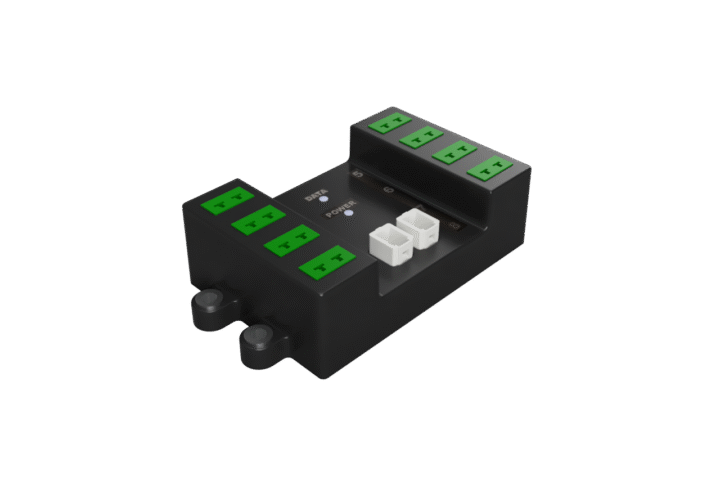
 This is precisely why we developed the Cell Guard battery safety sensor. Rather than monitoring at the pack level, Cell Guard operates at the individual cell level, detecting the off-gassing that occurs during the very earliest stages of thermal runaway. This off-gassing, which contains volatile organic compounds, begins well before temperature spikes become apparent to conventional sensors.
How Cell Guard would have made a difference
If the recalled Jeep vehicles had been equipped with Cell Guard sensors, owners would have received early warning of battery cell venting long before any fire risk occurred. The sensor’s ability to detect VOC emissions at the single-cell level means it can identify problems with separator damage as soon as the compromised cell begins to show signs of stress.
In practical terms, this would have transformed the recall scenario entirely. Instead of owners being told to park outside and avoid charging their vehicles indefinitely, the Cell Guard system would have alerted them to specific cells showing early warning signs. This data would enable targeted intervention, potentially allowing for the replacement of individual modules rather than waiting for a complete battery pack solution to be developed.
The sensor integrates directly into vehicle CAN bus systems, providing real-time data to both the vehicle’s onboard computer and, if required, to fleet management systems or manufacturer monitoring platforms. This means that the first indication of a problem would not be smoke or fire, but a diagnostic alert that could be addressed through routine maintenance.
Beyond individual vehicle safety
The implications of this recall extend far beyond the 320,000 affected vehicles. It raises fundamental questions about how the automotive industry approaches battery safety in the rapidly expanding electric and plug-in hybrid market. With EVs and plug-in hybrids projected to represent an increasingly significant portion of new vehicle sales, the current reactive approach to battery safety is unsustainable.
The financial impact alone is substantial. This recall will cost Stellantis hundreds of millions in direct costs, not to mention the immeasurable damage to brand reputation and customer confidence. Insurance companies are already reassessing premiums for electric vehicles, and incidents like this will only accelerate that trend. For owners unable to use their vehicles as intended, the personal and economic inconvenience is significant.
More critically, these high-profile safety issues risk undermining public confidence in electric vehicle technology at a crucial moment for the industry’s transition away from fossil fuels. Every fire, every recall, every dramatic headline creates hesitancy amongst potential EV buyers and provides ammunition for those resistant to the electrification transition.
The role of proactive monitoring
What the industry needs is a shift from reactive to proactive battery safety monitoring. Cell Guard represents this new approach. By continuously monitoring the chemical signatures of cell degradation, the system provides manufacturers and operators with actionable data before any safety risk emerges.
This proactive monitoring offers multiple benefits. For manufacturers, it provides real-world performance data that can inform battery design improvements and quality control processes. For fleet operators, it enables predictive maintenance scheduling, reducing downtime, and extending battery life. For individual vehicle owners, it provides peace of mind that their investment is continuously monitored for safety.
The technology also addresses one of the most challenging aspects of battery safety: the unpredictability of failure modes. Unlike mechanical components that fail in relatively predictable ways based on wear and usage patterns, battery cells can fail due to invisible manufacturing defects, transportation damage, or subtle degradation that accumulates over time. Cell Guard’s continuous monitoring catches these issues regardless of their origin.
Integration and retrofitting
One of the questions we frequently receive is whether Cell Guard can be retrofitted to existing vehicles. The answer is yes, though the complexity varies depending on the vehicle architecture. For vehicles in production, integration is straightforward, as the sensor can be incorporated into the battery pack design and connected to the existing CAN bus infrastructure.
For existing fleets, retrofitting is possible but requires access to the battery pack. Given the severity of the current Jeep recall, this might actually represent an opportune moment. If Stellantis’s remedy requires physical intervention with the battery packs, incorporating Cell Guard sensors during that process would provide an additional layer of safety and help restore customer confidence in these models.
The automotive industry is at an inflection point. The transition to electric mobility is inevitable and necessary, but it must be accomplished safely. Recalls like this one do not need to become routine. With the right sensing technology deployed at the right place in the system, we can detect and address battery problems before they become safety hazards.
A Call for Industry Standards
This recall should prompt a broader conversation about battery safety standards for electric and hybrid vehicles. Currently, regulations focus primarily on crash testing and basic battery management system requirements. There is insufficient emphasis on continuous health monitoring and early warning systems.
Metis Engineering has been advocating for industry-wide adoption of cell-level monitoring as a standard safety feature, not an optional extra. Just as stability control and automatic emergency braking have become standard safety equipment, continuous battery health monitoring should be considered essential for any vehicle with a high-voltage battery system.
The technology exists. The business case is clear when you factor in recall costs, insurance implications, and reputational risk. What’s needed now is the industry leadership to make battery safety monitoring a priority before the next recall, rather than a reaction to it.
Looking Forward
For the owners of affected Jeep vehicles, the immediate priority is following Stellantis’s safety guidance: park outside, avoid charging, and wait for the remedy to become available. For the broader automotive industry, this recall should serve as a catalyst for reassessing how we approach battery safety.
At Metis Engineering, we remain committed to advancing battery safety technology and working with manufacturers, fleet operators, and regulatory bodies to establish new standards for early detection and prevention of thermal runaway. The Cell Guard sensor represents one part of this solution, but the broader challenge requires industry-wide collaboration and a shared commitment to putting safety first.
The transition to electric mobility is too important to be derailed by preventable safety incidents. With the right monitoring systems in place, we can ensure that electric and hybrid vehicles are not just cleaner than their fossil fuel predecessors, but safer too.
The 320,000 Jeep owners awaiting a fix deserve better than being told to park outside and hope their vehicle does not catch fire. They deserve vehicles equipped with technology that would have detected this problem months ago, before it became a headline. That is the future we are working to build, one sensor at a time.