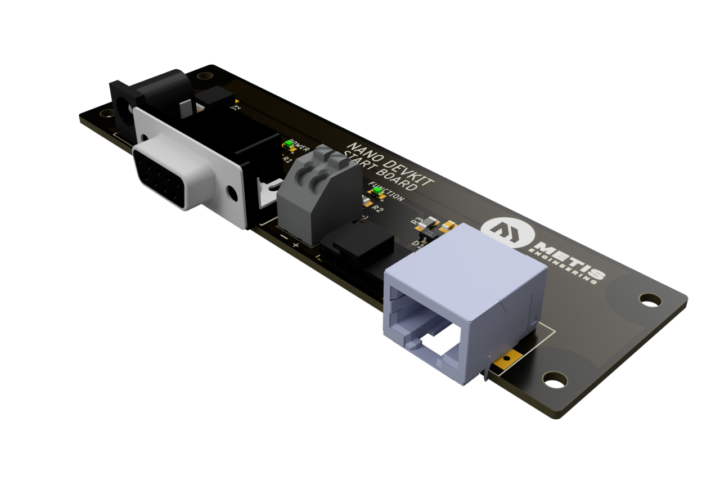
As hydrogen takes on a growing role in transport, energy storage and industrial power, the gas detector protecting that infrastructure has to work harder than most safety components. Hydrogen is colourless, odourless and highly flammable, which means a leak can go unnoticed until concentrations reach dangerous levels. Metis Engineering’s H Guard sensor was developed to close that gap, offering CAN based hydrogen detection sensitive enough to catch a trace leak long before it becomes a hazard.
Why hydrogen needs a dedicated gas detector
General purpose environmental sensors are not built to track hydrogen specifically, and hydrogen behaves differently from the gases most detectors are designed around. It is far lighter than air, disperses quickly in open environments, and its lower flammability limit sits at around 4 per cent concentration in air. H Guard is purpose built for this challenge, detecting hydrogen concentrations from 0 per cent up to 20 per cent, comfortably below the point at which a leak becomes an ignition risk, so that both trace leaks and larger releases are picked up early.
The sensor is derived from the same platform as Metis Engineering’s Cell Guard battery safety sensor, which means the underlying hardware has already been proven in demanding automotive and energy storage environments before being adapted specifically for hydrogen detection.
Inside the H Guard sensor
Alongside hydrogen, H Guard measures absolute pressure, air temperature, relative humidity and dew point temperature, and can be specified with an onboard three axis accelerometer rated to plus or minus 24g. That accelerometer option is particularly useful in mobile or dynamic applications, where g force, shock loads and vibration data can indicate whether a collision or drop has affected the safety of the system it protects.
The sensor includes a low power monitoring mode that suspends CAN transmissions until a predefined threshold is reached, at which point it switches automatically to active mode. A low side drive output pin, capable of 500mA, can also be triggered by a wake signal, allowing the gas detector to initiate a system response directly rather than simply reporting a reading. H Guard has been developed in accordance with ISO 26262 functional safety standards and tested to automotive EMC and environmental requirements.
Where a gas detector like H Guard is deployed
H Guard’s compact housing and 5 pin automotive grade Molex Nano-Fit connector make it straightforward to fit into hydrogen fuel cell vehicles, mobile and stationary hydrogen storage, and industrial scale electrolysers. It is equally suited to high pressure refuelling stations and hydrogen production facilities, where continuous, reliable leak detection is essential as the hydrogen economy scales up across transport, energy and industrial sectors.
As more of this infrastructure moves from pilot projects into everyday operation, the demands on a gas detector shift too. A sensor that performs well in a controlled trial has to go on performing in vehicles that experience vibration, temperature swings and years of duty cycles, and in industrial plants where downtime for maintenance carries a real cost. H Guard’s automotive grade construction and ISO 26262 development process reflect that shift from proof of concept to production reality.
Avoiding false alarms without missing real ones
Every gas detector has to strike a balance between sensitivity and stability. Set the threshold too low and nuisance alarms erode trust in the system, leading operators to ignore or override warnings. Set it too high and a genuine leak can go undetected until it is well established. H Guard’s detection range, from 0 per cent up to 20 per cent hydrogen concentration, is wide enough to register a trace leak early while still giving engineers room to tune alarm thresholds to suit the specific risk profile of their application, whether that is a sealed vehicle cabin or an open industrial yard.
Built for integration, not just detection
A configurable CAN bus speed and address, supplied alongside a CAN DBC file, means H Guard can be integrated into virtually any hydrogen powered system without bespoke interface engineering. Its small size and low mass keep installation simple, whether the target platform is an electric vehicle, a fuel cell system, or a stationary energy storage unit.
That ease of integration matters as much to a systems engineer as the raw detection performance does. A gas detector that requires a custom communication layer, or that cannot be tuned to a project’s existing CAN architecture, adds cost and risk to a programme long before it ever detects a leak. H Guard’s shared platform with Cell Guard also means that teams already familiar with Metis Engineering’s battery safety sensor face a shorter learning curve when they bring hydrogen detection into the same system.
Praat met Metis Engineering
If your hydrogen system, EV platform or energy storage architecture needs a gas detector built for early, reliable detection and straightforward CAN integration, Metis Engineering’s team can talk through how H Guard fits your application.