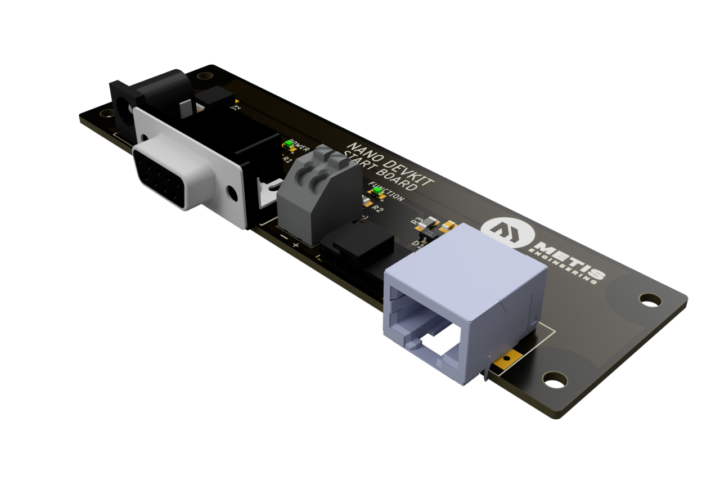
Analogue-to-Digital CAN Modules: Transform Legacy Sensors Into Smart Industrial Data
From analogue to insight: why an analogue-to-digital can module unlocks real-world sensor data and enables new technologies.
Industrial automation and vehicle electronics have evolved dramatically, yet many critical systems still rely on legacy analogue sensors that create data silos and integration challenges. The solution lies in analogue-to-digital CAN modules that bridge the gap between traditional sensors and modern digital systems, unlocking unprecedented levels of connectivity, reliability, and insight, allowing industries to gain a competitive edge .
The Digital Transformation Challenge in Industrial Systems
Modern industrial applications—from electric vehicles and energy storage systems to hydrogen processing and marine automation—demand real-time, reliable data for optimal performance and safety. However, many existing installations feature analogue sensors that weren’t designed for today’s interconnected world, highlighting a shift towards digital technology .
These legacy analogue signals present several critical challenges:
Signal Integrity Issues: Long analogue cable runs are susceptible to electromagnetic interference (EMI), voltage drops, and ground loops that degrade signal quality and measurement accuracy. This becomes particularly problematic in industrial environments with heavy machinery, motors, and switching equipment.
Installation Complexity: Traditional analogue sensor installations require dedicated home-run cables from each sensor back to the control system, resulting in complex wiring harnesses, increased installation time, and higher material costs.
Limited Scalability: Adding new sensors to analogue systems often requires significant rewiring and controller modifications, making system expansion expensive and time-consuming.
Data Synchronisation Problems: Analogue signals sampled at different times and locations can create timing mismatches that complicate data analysis and control algorithms.
What is an Analogue-to-Digital CAN Module?
An analogue-to-digital CAN module is a specialised device that converts traditional analogue sensor signals into digital CAN (Controller Area Network) messages, providing detailed information for integration into modern control system . These modules sample analogue inputs with high precision, process the data digitally, and transmit standardised CAN frames that can be easily integrated into modern control systems, enabling access to real world data .
The technology works by positioning the analogue-to-digital conversion process as close to the sensor as possible—a concept known as “edge digitisation.” This approach minimises the length of analogue signal runs while maximising the benefits of digital communication throughout the rest of the system.
Key Technical Capabilities
Modern analogue-to-digital CAN modules support multiple input types and signal conditioning options:
Voltage Input Channels: Direct measurement of 0-10V, 0-5V, and other standard voltage ranges from position sensors, pressure transmitters, and temperature devices.
Current Loop Support: Full compatibility with 4-20mA industrial instrumentation, providing power and signal conditioning for two-wire transmitters.
Resistive Sensor Interface: Direct connection to thermistors, RTDs, strain gauges, and other resistive elements through configurable signal conditioning.
Digital Input Capability: Integration of switch contacts, alarm signals, and discrete status indicators alongside analogue channels.
The CAN Bus Advantage for Industrial Applications
CAN bus technology has become the backbone of modern industrial and automotive communications for compelling reasons. Originally developed for automotive applications, CAN has proven its reliability and effectiveness across diverse industrial sectors.
Noise Immunity and Signal Integrity
CAN’s differential signaling and robust message framing provide exceptional immunity to electrical noise and interference. Unlike analogue signals that degrade with distance and interference, CAN messages either arrive correctly or are detected as errors and retransmitted.
This noise immunity is particularly valuable in industrial environments where:
- Variable frequency drives create electromagnetic interference
- Heavy machinery generates electrical noise
- Long cable runs are necessary
- Multiple systems share common power sources
Simplified Installation and Maintenance
CAN’s bus topology dramatically simplifies installation compared to star-configured analogue systems. A single twisted-pair cable can carry data from dozens of sensors, reducing:
- Cable requirements by up to 90%
- Installation time and complexity
- Troubleshooting difficulty
- Long-term maintenance costs
Native System Integration
Most modern industrial controllers, battery management systems (BMS), electronic control units (ECUs), and data acquisition systems include native CAN interfaces. This eliminates the need for custom interface cards or protocol converters, enabling plug-and-play integration with existing systems.
Deterministic Performance
CAN’s priority-based message arbitration ensures that critical data receives transmission priority, allowing systems to gain efficiency in safety-critical applications where timing and reliability are paramount.
Industry Applications: Where Analogue-to-Digital CAN Modules Excel
Electric Vehicle and Battery Systems
The electric vehicle industry presents unique challenges for sensor integration and monitoring. Battery packs require comprehensive monitoring of not just individual cell voltages and temperatures, but also auxiliary parameters that affect safety and performance.
Battery Management System Integration: Analogue-to-Digital CAN modules enable BMS integration of auxiliary sensors to meet specific needs including:
- Pack enclosure humidity and temperature
- Coolant pressure and flow sensors
- Vent pressure monitoring
- Relay position feedback
- Isolation monitoring equipment
Safety Enhancement: By bringing auxiliary sensor data onto the CAN bus, battery systems gain comprehensive situational awareness. For example, combining enclosure humidity data with temperature trends can predict condensation risks that might affect electrical safety.
Service and Diagnostics: Technicians can access complete sensor data through standard CAN diagnostic tools, which serve a critical function by eliminating the need to access high-voltage areas during troubleshooting.
Energy Storage and Microgrid Applications
Large-scale energy storage systems and microgrids require monitoring of diverse equipment distributed across significant physical distances. Analogue-to-Digital CAN modules unify this disparate sensor data into coherent, time-synchronised information streams.
Multi-Vendor Integration: Energy storage installations often combine equipment from multiple manufacturers. CAN modules provide a common data format that bridges different sensor types and specifications.
Predictive Maintenance: High-resolution, time-stamped sensor data enables advanced analytics for equipment health monitoring and predictive maintenance scheduling.
Grid Integration: CAN-based sensor networks can interface with higher-level communication systems through CAN-to-Ethernet gateways, enabling integration with SCADA systems and grid management platforms.
Hydrogen and Process Safety Applications
Hydrogen production, storage, and fuel cell applications demand exceptional safety monitoring due to hydrogen’s unique properties and safety considerations.
Multi-Parameter Monitoring: Hydrogen safety requires monitoring of pressure, temperature, gas concentration, flow rates, and environmental conditions. Analogue-to-Digital CAN modules enable unified monitoring of these diverse parameters, paving the way for the adoption of new technologies .
Alarm Integration: Safety systems can process CAN-based sensor data to generate coordinated alarms and interlocks across multiple subsystems.
Event Recording: Time-stamped CAN data provides detailed forensic information for incident analysis and regulatory compliance.
Marine and Transportation Applications
Marine environments present extreme challenges for sensor systems, including vibration, temperature extremes, humidity, and electromagnetic interference from navigation and communication equipment, which can significantly affect sensor performance and form .
Environmental Resilience: Marine-rated analogue-to-digital CAN modules withstand harsh conditions while maintaining measurement accuracy and communication reliability.
Long-Distance Communication: CAN’s ability to communicate reliably over extended distances makes it ideal for large vessels and offshore installations.
System Integration: Modern marine systems increasingly rely on integrated bridge systems and engine management platforms that utilise CAN communication protocols.
Technical Implementation: From Sensors to Systems
Signal Conditioning and Conversion
Modern analogue-to-digital CAN modules incorporate sophisticated signal conditioning capabilities that eliminate the need for external conditioning equipment in many applications.
Input Protection: Built-in protection circuits guard against overvoltage, reverse polarity, and short circuits that could damage sensitive measurement circuits.
Programmable Scaling: Software-configurable input ranges and scaling factors accommodate diverse sensor specifications without hardware modifications.
Multi-Range Capability: Advanced modules automatically select optimal measurement ranges to maximise resolution while preventing overrange conditions.
CAN Message Design and Database Management
Effective implementation requires careful design of CAN message structures and database definition files (DBC) that define how sensor data is packaged and interpreted, with a focus on ensuring optimal performance .
Message Prioritisation: Critical safety parameters should utilise high-priority CAN identifiers to ensure timely delivery, while trending data can use lower priority messages.
Data Packing Efficiency: Optimal message design balances update rates, resolution requirements, and bus bandwidth utilisation.
Diagnostic Information: Each CAN message should include status and diagnostic information that enables remote health monitoring and fault detection.
Network Architecture and Topology
Successful implementation requires careful consideration of network topology, termination, and power distribution.
Bus Segmentation: Large systems may benefit from multiple CAN segments connected through bridges or gateways to manage traffic loads and improve fault isolation.
Termination Strategy: Proper 120-ohm termination at both ends of each CAN segment ensures signal integrity and prevents reflections that could cause communication errors.
Power and Ground Design: Consistent power supply design and proper grounding techniques prevent ground loops and power supply noise from affecting communication reliability.
Performance Benefits and ROI Analysis
Signal Quality Improvements
Edge digitisation through analogue-to-digital CAN modules typically delivers measurable improvements in signal quality and measurement reliability.
Noise Reduction: By minimising analogue signal runs, systems typically see 10-50dB improvements in signal-to-noise ratios compared to long analogue cables.
Timing Accuracy: Synchronised sampling at the sensor location eliminates timing uncertainties associated with multiplexed analogue inputs.
Resolution Enhancement: High-resolution ADCs combined with optimal signal conditioning often provide better effective resolution than traditional analogue systems.
Installation and Commissioning Efficiency
The simplified wiring and standardised communication protocols of CAN-based systems deliver significant time and cost savings during installation and commissioning.
Reduced Installation Time: Projects typically report 30-60% reductions in sensor wiring installation time compared to traditional analogue systems.
Faster Commissioning: Standard CAN diagnostic tools and well-defined message formats accelerate system bring-up and testing procedures.
Simplified Troubleshooting: Digital communication provides clear error indication and diagnostic information that speeds fault isolation and resolution.
Long-Term Operational Benefits
Beyond initial installation advantages, analogue-to-digital CAN modules provide ongoing operational benefits that compound over the system lifecycle.
Reduced Maintenance: Digital communication eliminates many failure modes associated with analogue systems, including connector corrosion, cable degradation, and signal drift.
Enhanced Diagnostics: Comprehensive diagnostic information enables predictive maintenance approaches and services that prevent unexpected failures.
Improved Analytics: Clean, time-synchronised data enables advanced analytics and machine learning applications that weren’t feasible with traditional analogue systems, and even integration with the internet .
Implementation Best Practices
System Planning and Design
Successful implementation begins with comprehensive system planning that considers both technical requirements and operational constraints.
Sensor Audit: Catalog existing sensors, their specifications, and signal requirements to determine module requirements and configuration.
Communication Design: Plan CAN message structures, update rates, and identifier assignments to optimise performance and ensure efficient communication without conflicts.
Infrastructure Requirements: Assess power, mounting, and environmental requirements for module locations.
Installation and Configuration
Proper installation and configuration practices ensure optimal performance and long-term reliability.
Environmental Protection: Select appropriate enclosure ratings and environmental protection for each installation location.
Cable Management: Use proper cable routing, strain relief, and protection to prevent physical damage and electromagnetic interference.
Configuration Validation: Implement comprehensive testing procedures to verify proper scaling, timing, and diagnostic functions.
Maintenance and Support
Ongoing maintenance practices ensure continued optimal performance throughout the system lifecycle.
Periodic Calibration: Establish calibration schedules and procedures appropriate for each sensor type and application requirements.
Diagnostic Monitoring: Implement monitoring systems that track diagnostic parameters and alert operators to potential issues.
Documentation Management: Maintain current documentation including DBC files, wiring diagrams, and configuration records.
Future-Proofing Your Investment
Scalability and Expansion
Well-designed analogue-to-digital CAN systems provide exceptional scalability for future expansion and modification.
Modular Architecture: Additional sensors and monitoring points can be added without disrupting existing systems or requiring controller modifications.
Protocol Evolution: CAN-FD and other advanced protocols provide migration paths for applications requiring higher bandwidth or advanced features.
Integration Flexibility: Standard CAN interfaces ensure compatibility with future control systems and diagnostic equipment.
Technology Integration
Modern analogue-to-digital CAN modules increasingly incorporate advanced features that support emerging technologies and applications, making them more efficient .
IoT Connectivity: Gateway capabilities enable integration with cloud-based analytics platforms and remote monitoring systems.
Artificial Intelligence: High-quality, time-synchronised sensor data provides the foundation for AI-powered predictive maintenance and optimisation systems.
Digital Twin Integration: Comprehensive sensor networks enable detailed digital twin models that support advanced simulation and analysis capabilities, enhancing the human machine interface .
Conclusion: Transforming Industrial Data Architecture
Analogue-to-digital CAN modules represent a fundamental shift in how industrial systems approach sensor integration and data management. By moving the analogue-to-digital conversion process to the edge and leveraging robust CAN communication protocols, these systems deliver improvements in reliability, maintainability, and capability that justify their adoption across diverse industrial applications.
The technology addresses real problems that have plagued industrial systems for decades: signal degradation, installation complexity, maintenance challenges, and integration difficulties. The solutions provide immediate benefits in terms of improved data quality and reduced installation costs, while also enabling future capabilities that weren’t practical with traditional analogue systems.
For organisations considering the transition from legacy analogue sensors to modern digital communication systems, analogue-to-digital CAN modules provide a proven, cost-effective pathway that preserves existing sensor investments while unlocking the benefits of digital integration.
The combination of improved reliability, simplified installation, enhanced diagnostics, and future scalability makes these modules essential for organisations looking to develop practical skills in modern industrial automation and control systems. As industries continue their digital transformation journey, the bridge between legacy sensors and new systems becomes increasingly critical for operational success.
Ready to transform your sensor data architecture? Explore the complete range of Metis Engineering Analogue-to-Digital CAN Modules and discover how edge digitisation can revolutionise your industrial monitoring and control systems, empowering you to act on real-time data .