As electric vehicles move from early adoption into the automotive mainstream, battery safety has become one of the defining engineering challenges of the transition. Every EV battery pack already carries a Battery Management System, watching voltage and temperature across the cells. Yet these established safeguards were never designed to catch the earliest signs of cell failure. VOC detection closes that gap, and it is quickly becoming one of the most important tools in the battery safety toolkit.
Why Voltage and Temperature Sensors Run Out of Road
A conventional BMS typically monitors five core functions: measuring battery parameters, providing electrical protection, estimating state of charge and health, optimising performance, and reporting status to the vehicle. These functions are essential, but they rely on temperature and voltage, both of which are lagging indicators. Temperature sensors are often fitted to only a handful of points across a pack, meaning a single failing cell can go unnoticed until heat has already spread. Voltage fluctuations can be masked entirely, since neighbouring cells connected in parallel will often prop up the voltage reading of a failing cell, disguising the problem in its earliest, most treatable stage.
What Happens Inside a Cell Before It Vents
When a lithium-ion cell begins to fail, whether from a manufacturing defect, physical damage or abusive charging, the internal electrolyte starts to break down before the pack reaches dangerous temperatures. This decomposition releases Volatile Organic Compounds, gases such as ethylene carbonate and diethyl carbonate, into the sealed atmosphere of the battery enclosure. This off-gassing, known as cell venting, is one of the earliest physical signs of an impending problem and it typically occurs thirty to sixty seconds before a temperature rise becomes detectable by conventional sensors, often minutes before the critical 150 to 200 degree Celsius threshold associated with full thermal runaway.
How VOC Detection Works in Practice
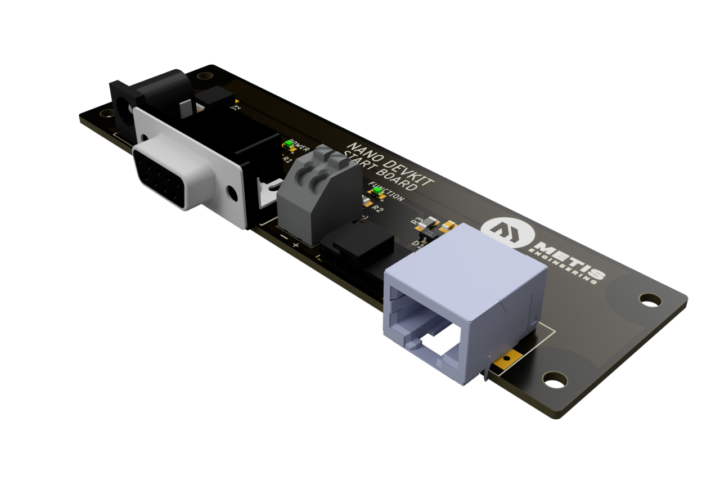
This is the window that VOC detection is designed to exploit. 牢房卫士, Metis Engineering’s CAN-based battery safety sensor, is installed close to the pack’s breather port, the point where internal atmosphere changes are most detectable. Rather than adding another voltage or temperature probe, Cell Guard introduces an entirely different detection modality: continuous analysis of the air inside the enclosure. It measures Volatile Organic Compounds, absolute pressure, air temperature, relative humidity, absolute humidity and dew point simultaneously, with an optional accelerometer available to record shock loads up to plus or minus 24G.
A low power mode allows the sensor to monitor continuously without needing to transmit on the CAN bus until a pre-set threshold is reached, at which point it wakes and reports in seconds. Hydrogen detection is available as a secondary indicator, since hydrogen tends to appear later in the venting sequence and can also flag electrolysis caused by water ingress into the pack.
Validated by Independent Testing
Confidence in a safety sensor has to be earned through independent scrutiny, not marketing claims. Sandia National Laboratories, publishing in the Journal of The Electrochemical Society, tested Cell Guard against two competing technologies, one designed for stationary storage and priced at a significant premium, the other an EV-focused sensor that monitored hydrogen alone. Cell Guard detected the thermal event in under sixty seconds. The hydrogen-only sensor took a full seven minutes longer to register the same event, by which point thermal runaway had already progressed to an advanced stage. That seven-minute margin is the difference between a controlled shutdown and a fire.
Built for Automotive Integration
None of this counts for much if a sensor cannot survive the automotive environment or fit within an existing pack architecture. Cell Guard is compact and lightweight, connects through a five-pin automotive-rated Molex Nano-Fit power connector, and is supplied with a configurable CAN address, baud rate and DBC file for rapid integration. It is designed and manufactured in the United Kingdom in line with ISO 26262 processes, and tested to ISO7637-2:2011, ISO 16750-2:2012 and ISO 16750-4:2010, the standards automotive engineers expect. It performs consistently across NMC, LFP and LMFP chemistries, and is already deployed by OEMs and Tier 1 suppliers in ASIL B applications.
Where Cell Guard Fits in the Wider Safety Stack
VOC detection is not a replacement for a well-designed BMS, it is the layer that fills the gap a BMS cannot reach. By cross-checking VOC readings against temperature and voltage data, engineers gain a genuinely early warning of cell venting, enough time to isolate the affected module, trigger enhanced cooling, or alert the driver to stop and evacuate. As battery packs grow larger and more energy-dense to meet range expectations, that early warning window becomes more valuable, not less. For automotive engineers building the next generation of safe, reliable EV platforms, VOC detection with Cell Guard is fast becoming a standard design consideration rather than an optional extra.
To find out how Cell Guard can be integrated into your battery pack design, visit the Cell Guard product page or get in touch with the Metis Engineering team.