Smart air quality monitoring is becoming increasingly vital across a broad spectrum of industries—from smart homes and city infrastructure to electric vehicles (EVs), HVAC systems, and battery energy storage systems (BESS). Modern air quality sensors such as Metis Engineering’s Air Wise play a pivotal role in safeguarding health, improving HVAC performance, and preventing hazardous events like thermal runaway in batteries.
In residential and urban applications, these sensors track pollutants and airborne particles to ensure indoor air quality and enable early smoke detection. Inside vehicles, they monitor gases like carbon dioxide (CO₂) and volatile organic compounds (VOCs) to maintain passenger safety. For EVs and energy storage systems, air quality sensors provide early warning signals by detecting pressure changes and gas buildup inside battery enclosures.
To be effective in these settings, the sensors must be compact, energy-efficient, and capable of supporting features such as secure firmware updates and connectivity to cloud or local networks. Pre-calibrated sensor modules offer an efficient solution by minimising development costs and time-to-market delays.
Key Technologies Behind Smart Air Quality Monitoring
1. Optical Particulate Matter Sensors (OPCs)
Particulate matter (PM) sensors such as optical particle counters (OPCs) are widely used to detect pollutants like PM1.0, PM2.5, and PM10. These devices pass air through a chamber where a laser and photodiode detect particles based on light scattering. The measured scatter is then converted into a mass concentration value in µg/m³.
While OPCs offer real-time data, they rely heavily on assumptions about particle size and shape, making them less accurate than gravimetric methods. Lower-cost OPCs, for example, often sample just 5% of the air and extrapolate using estimation algorithms. However, with the help of advanced software, these sensors can still deliver reliable readings in real-world scenarios.
2. Electrochemical Gas Sensors (Amperometric Sensors)
Amperometric sensors are ideal for detecting gases such as CO, NH₃, and CH₄. These sensors generate an electrical current proportional to the concentration of the target gas. A typical setup includes a sensing electrode, electrolyte, and counter electrode. Some designs also include a reference electrode to enhance stability and signal precision.
Their low power requirements and high sensitivity make these sensors perfect for compact and portable air quality monitoring systems.
Multi-Sensor Solutions for EV Battery Packs and BESS Safety
Environmental monitoring in EV and BESS applications goes beyond basic air quality. Multi-parameter sensor arrays are employed to monitor pressure, temperature, humidity, dew point, and gas concentration. For instance, a rise in hydrogen levels beyond 4% can signal a potentially explosive scenario during battery venting.
Sensors like the Metis Engineering Cell Guard provide this kind of protection by detecting the early stages of battery failure and enabling the battery management system (BMS) to intervene proactively. These sensors can also monitor for overcooling, which risks internal condensation and short circuits.
🔹 Metis Cell Guard for Battery Safety
Designed specifically for EV and energy storage systems, this sensor provides real-time data on pressure, temperature, VOCs, and shock events. Key features:
-
CAN bus communication
-
Optional 24G shock sensor
-
Wide detection range: VOCs, CO₂, hydrogen, absolute humidity
🔹 Sensor Development Kits for Fast Integration
-
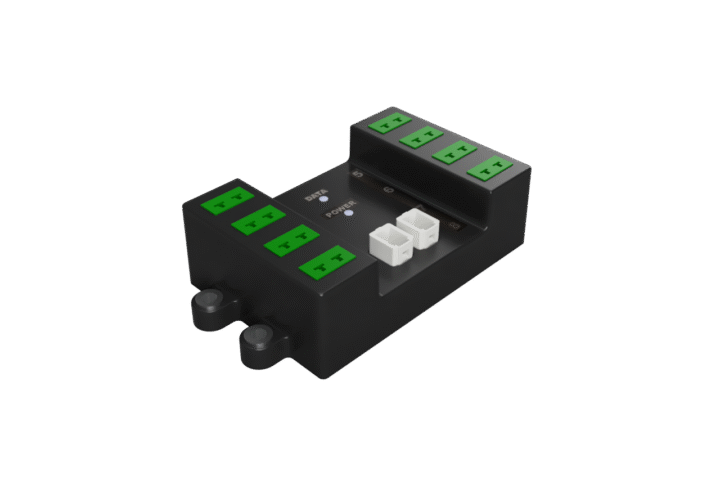
纳米开发套件 from Metis: Rapid integration of CAN sensors, expandable for additional nodes
Final Thoughts: Smart Sensors for a Smarter Future
Environmental sensing is no longer limited to industrial applications. With air quality concerns rising globally, integrating advanced sensing solutions into everyday systems—whether smart homes, vehicles, or energy grids—is not just a benefit but a necessity.
Whether you’re designing a secure, cloud-connected HVAC solution or building battery safety features into next-gen EVs, choosing the right air quality sensor technology is critical. Opt for scalable, pre-calibrated, multi-sensor platforms to streamline development and ensure long-term performance.